Get Full Government Meeting Transcripts, Videos, & Alerts Forever!
Get email alerts on the Libya Unsmil topic
No spam. Unsubscribe anytime.
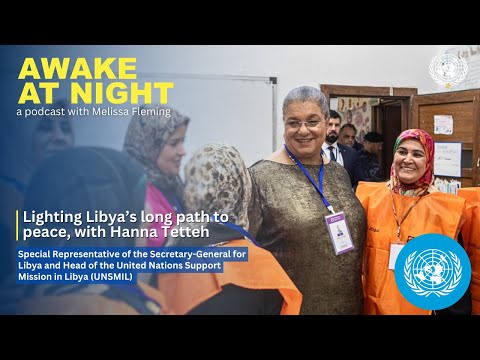
UN envoy Hannah Tetteh urges Libyan unity and elections to unlock oil wealth
Summary
Hannah Tetteh, the UN Special Representative for Libya and head of UNSMIL, told an interview that Libya's east'west political divide and fragmented security forces are blocking the country from turning vast hydrocarbon resources into broadly shared prosperity, and she urged renewed elections, security unification and targeted accountability measures.
Hannah Tetteh, the United Nations Special Representative for Libya and head of the UN Support Mission in Libya (UNSMIL), said Libya's divided politics and fragmented security forces are preventing the country from benefiting from its oil and gas wealth and fueling risks from migration and armed groups.
"Libya has Africa's largest hydrocarbon deposits," Tetteh said, adding the country also holds the continent's fourth-largest natural gas reserves and has a population of about 7.5 million. "There's no reason why this country should be poor," she said, but political divisions have produced a poverty rate she put at about 30 percent.
Tetteh described a de-facto split in authority between the Libyan National Army (LNA) in the east and a Government of National Unity (GNU) in the west after an expected national election was called off. "So you have de facto two authorities in the East and in the West running Libya," she said, and UNSMIL is working through a political roadmap launched last August to bring the two sides back together and hold long-postponed nationwide votes.
Why elections, she argued, is tied to governance: a unified, legitimately elected government could better oversee security unification and the management of Libya's natural-resource revenues. "There's a government with the legitimacy and authority to undertake other key actions, especially as regards stabilizing the security situation, managing the country's economic resources," she said.
On security and daily operations, Tetteh gave a blunt account of risk: "The threat level is level 5 across the entirety of Libya, extremely high risk." She described living and working from the UN compound in Tripoli's Janzur district, traveling in bulletproof vehicles and relying on the UN guard unit for protection while still maintaining in-person engagement with Libyan interlocutors.
Tetteh emphasized that the mission is political in nature but that UNSMIL can and does turn to the Security Council and Chapter VII tools when stalemates make progress impossible. "We have some direct influence over the Libyan political process," she said, while stressing that the UN seeks to leave Libyans "leadership and agency" to run their own affairs.
Migration and human trafficking remain a major humanitarian and security concern, Tetteh said. She described transnational trafficking networks that draw migrants through the Sahel and other regions and the dangerous sea crossings to Europe. People intercepted or returned are often held in detention conditions she characterized as "horrible," exploited and abused.
Youth discontent is another recurring threat, Tetteh warned. Young Libyans, she said, compare their prospects with other oil-producing states and face low entry-level wages and heavy public-payroll and subsidy burdens; she estimated that "almost 80% of the population is on government payroll" and that entry-level monthly incomes could be around $135'$140. Those economic pressures, she said, feed impatience and the risk that unrest could grow if political leaders do not create opportunities beyond construction jobs.
Tetteh highlighted modest democratic progress at the local level: UNSMIL supported municipal elections in roughly 114 municipalities on a rolling basis, and she noted that for the first time Libya elected two women mayors and multiple female municipal councilors. To improve women's participation in political processes, UNSMIL established a structured dialogue with a target of 35 percent female representation and a women's caucus to prepare and elevate women leaders.
Asked about the use of sanctions and accountability in other regional conflicts, Tetteh argued targeted, personal sanctions can be an important lever. "We're sanctioning a particular individual who we know is instigating this, and we're making it very difficult for them to move around," she said, describing personal sanctions as a tool to hold leaders accountable without punishing entire populations.
Tetteh framed her own approach to the Libya assignment as patient, fact-based engagement. Drawing on her experience in Ghana and other UN postings, she said the work of peacebuilding requires endurance, preparation and a willingness to find openings that can produce incremental progress.
She concluded by expressing cautious optimism that further legislative or national elections could refresh institutions that have been in office since 2014 and help create the conditions for security unification and more effective resource management. The interview ended with Tetteh's appeal for political leaders to seize openings that would allow the international community and Libyans themselves to build on modest gains at the local level.
The interview was conducted by the program host and focused on UNSMIL's political work, security conditions, migration and local democratic developments in Libya.