Get Full Government Meeting Transcripts, Videos, & Alerts Forever!
Get email alerts on the Strategic Plan topic
No spam. Unsubscribe anytime.
MSD Shakamak superintendent unveils draft three-year strategic plan, seeks board adoption in February
Summary
The superintendent presented a first reading of a three-year strategic plan with three key priority areas — instructional excellence, expanded opportunities and stewardship of resources — and requested board feedback ahead of a planned vote in February.
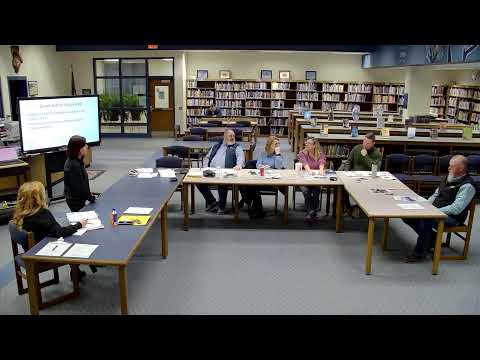
The superintendent presented a draft three-year strategic plan to the MSD Shakamak Schools board at a public work session, saying the plan is informed by survey results, focus groups and district data gathered during the superintendent search.
"We are good. We're ready to be great," the superintendent said, summarizing stakeholder sentiment and urging the board to review the draft and provide feedback ahead of a formal adoption vote planned for February.
The plan centers on three key priority areas (KPAs). KPA 1 focuses on student learning outcomes and instructional excellence: the superintendent proposed establishing a guaranteed instructional framework K–12, balanced assessment practices, and a multi-tiered system of support (MTSS) so the district can use data to guide interventions and measure growth.
KPA 2 aims to expand student opportunities through intentional career-exploration pathways beginning in kindergarten, preserving dual-credit offerings, and pursuing industry-recognition options (the superintendent cited OSHA certification as an example) so graduates have clearer postsecondary and employment choices.
KPA 3 emphasizes stewardship of resources, improving facilities and amplifying consistent, transparent communication. The superintendent said leaders will develop a KPA dashboard to deliver semester-based progress reports and allow the board to monitor measurable indicators.
The superintendent described a three-year rollout: foundation and alignment in year 1, implementation in year 2 and expansion/sustainability in year 3. Board members asked how the district will sustain the plan past three years; the superintendent outlined an iterative review cycle that would begin before the third year ends.
The presentation included a preliminary list of capital priorities, based on initial responses: top concerns were fire/security/safety work, the elementary kitchen and PA system, a bus-replacement plan and an elementary playground. The superintendent invited one-on-one follow-up meetings and said adoption was targeted for February after a month for board feedback.