Get Full Government Meeting Transcripts, Videos, & Alerts Forever!
Get email alerts on the Property Tax Exemption topic
No spam. Unsubscribe anytime.
Port Royal officials raise alarm after apartment complex granted state tax exemption that cuts roughly $1.3 million from local rolls
Summary
Town staff told the council that the Preserve Apartments, bought by a private equity firm, received tax-exempt status from the South Carolina Department of Revenue; staff estimate the change reduces local property-tax revenue by about $1.3 million across town, schools and county and said they have filed FOIA requests and requested legislative review.
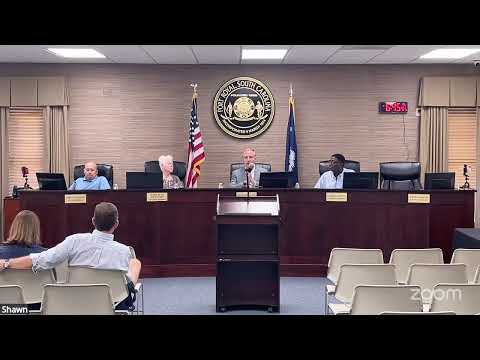
Port Royal officials spent much of their April 1 workshop explaining why a state-granted property-tax exemption for a large apartment complex will significantly reduce local tax revenue.
Staff reported that the county received an exemption list from the South Carolina Department of Revenue on May 30, 2025, showing the Preserve Apartments had been placed on an exemption roster and therefore no longer pay property taxes. A staff member told the council the town now expects to lose roughly $349,867 in annual revenue, the school district about $726,123 and the county roughly $259,000 plus a $13,000 open-space set-aside — a combined impact the town described as about $1.3 million.
Why it matters: The exemption followed the Preserve’s sale to an out-of-state owner; staff said the buyer’s corporate structure included a nonprofit entity with a fractional (0.1%) interest, a configuration that the staff briefing said can qualify a larger corporate owner for tax-exempt status under existing state rules. Mayor (speaker 1) and staff (speaker 4) described that outcome as an unintended loophole in the law — one that can turn a for-profit, private-equity-owned complex into a property that pays no local property taxes.
Staff account and actions taken: A staff member told the council they discovered the reduction while reconciling property-tax revenue during budget work and then reviewed county records and the Department of Revenue exemption list. The town said it has filed Freedom of Information Act requests for the application and backup materials and has asked the local legislative delegation to request a Ways and Means committee or subcommittee hearing to review the statute and the Preserve’s application. According to the briefing, the Preserve’s exemption application listed all 40 buildings as qualifying for low-to-moderate-income status; those pages were heavily redacted in the FOIA response.
Claims and local concerns: Council members pressed how the exemption passed through state review without local notice and whether rental rolls submitted to the Department of Revenue accurately reflected tenant incomes and affordability. Mayor (speaker 1) said a firefighter who earns about $48,000 annually was told a one‑bedroom rate at the Preserve would be $14.50 per month in the published materials staff reviewed — a figure the mayor used to illustrate concerns that the property may not be operating as affordable housing in practice.
State response and next steps: Staff said the Department of Revenue suggested an audit, but that the town itself does not vet applications or rental rosters — the state reviews the submitted materials. The town said it will continue FOIA work, pursue delegation assistance for a legislative hearing, and raise the issue in upcoming budget discussions beginning in May to determine how to address the revenue shortfall. Staff emphasized the town will maintain essential services and adjust internally to cover the gap.
Context: The matter concerns state law and how it defines qualifying nonprofit or affordable-housing ownership structures; staff said one bill (S.125 in the 2026 session) would have tied exemptions more tightly to an LLC’s actual low-to-moderate-income percentage but stalled in the House Ways and Means committee. Council members warned that, if unrestricted, the exemption structure could be used repeatedly by other owners and urged mayors and councils across the state to watch for similar approvals.
What the council said next: Council members asked whether the exemption survives a resale; staff answered ownership structure matters — if a future buyer also had the minimal nonprofit interest the sale could retain exempt status. The council requested continued updates and said staff would notify residents and incorporate the issue into the town’s budget planning.