Get Full Government Meeting Transcripts, Videos, & Alerts Forever!
Get email alerts on the Utilities Budget topic
No spam. Unsubscribe anytime.
New Harmony council eyes utility-rate increase after payroll-allocation review
Summary
Council members reviewed a staff analysis showing roughly 74% of payroll costs are allocated to utilities and agreed to hold a budget-only special meeting to decide whether to reallocate costs or pursue a phased rate increase. Staff will ask state accounting authorities and present a consultant briefing before any public hearing.
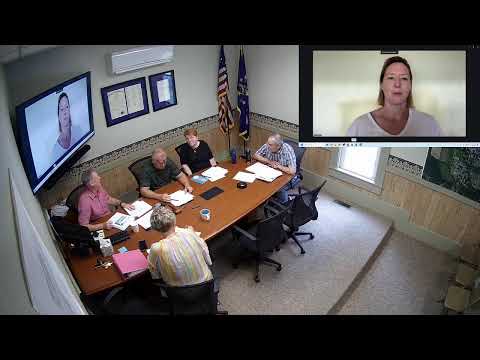
The New Harmony Town Council met in a special session to review how staff payroll is allocated across town funds and whether those allocations justify a utility-rate increase.
The chair, speaking as chairperson of the bridge authority, walked the council through an Excel spreadsheet showing staff hourly rates, a 35% benefits loading and time allocations. "Seventy‑four percent of our total payroll cost gets allocated to the utilities," the chair said, arguing that payroll is the primary driver of any proposed rate change.
The presentation relied on a Baker Tilly financial plan that the chair said projects $328,000 in receipts for fiscal year 2027. Council members noted that property‑tax revenue would not cover payroll-driven costs and that, absent reallocations, the water/gas/sewer funds would need to make up the shortfall. "Property tax doesn't even come close to covering the payroll," the chair said.
Council members pressed staff for more precise time tracking for utility and parks work and asked the clerk and consultant to confirm whether state accounting rules require certain funds (for example, cemetery or motor‑vehicle‑highway) to be accounted for separately. Laura Arenberg, the clerk‑treasurer, and other members recommended collecting harder data from the town superintendent on how crew hours are actually spent.
Members also discussed operational options for parks maintenance, including outsourcing mowing. Laura Arenberg suggested that subcontracting mowing could make costs easier to track: "If we're paying $30 an hour to have our guys do it, you could just hire a lawn service," she said, noting that a commercial contractor could simplify accounting for parks costs.
Rather than make a decision at the special session, the council set a follow‑up, budget‑only meeting for 9:00 a.m. on the 15th to go line‑by‑line through allocations and to invite budget staff (Janet) and the rate‑study consultant to present findings before a public hearing on any rate change.
Next steps: staff will confirm state accounting guidance, ask Jonathan (town superintendent) for time‑use figures, and arrange a consultant presentation before the public hearing process.