Get Full Government Meeting Transcripts, Videos, & Alerts Forever!
Get email alerts on the Rental Inspections topic
No spam. Unsubscribe anytime.
Mishawaka council advances discussion of rental-inspection ordinance amid questions on owner disclosure and enforcement
Summary
City officials and residents debated a proposed rental-inspection ordinance that would create a public registry, allow yellow/red tagging of unsafe rental properties, and rely on state unsafe-building definitions; councilors and commenters raised concerns about locating out-of-state LLC owners, tenant protections, and coordination with existing nuisance laws.
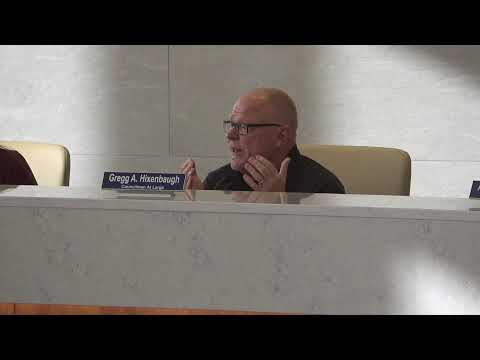
Mishawaka city staff and councilors on Monday discussed a proposed rental-inspection ordinance intended to protect tenants and address neighborhood blight while creating a public registry of rental properties and enforcement tools for owners who do not respond to inspections.
The proposal would use state unsafe-building definitions to identify hazards and allow the city to place yellow or red tags on properties with violations. "If it's life safety issue, then they need to vacate the property right away," the code enforcement director said, describing past incidents where structures were immediately closed after beams or walls failed.
Why it matters: Council members and residents said the ordinance could make it easier to hold negligent owners accountable and help buyers, realtors and tenants know whether a property has outstanding safety or code issues. At the same time, several speakers cautioned the council to balance tenant protections and enforcement against the administrative burden on responsible landlords.
Council members pressed staff on how buyers would discover flagged properties and how the city would identify absentee owners. The director said the city would "yellow tag it" and store the tag in code-enforcement software; those records would be public through freedom-of-information requests, though not directly viewable by logging into the software.
"It's like buyer beware," the police chief said, noting that realtors and buyers routinely request open-case information; the director added staff generally respond quickly to inquiries about a property's status.
Several councilors highlighted the practical difficulty of tracking owners whose properties are held by out-of-state LLCs. One member asked whether the city could use Secretary of State records or assessor data to find registered agents; staff said those are common search tools and that private firms have offered services to identify property owners if needed.
Public commenters urged clarity and restraint in any requirement on beneficial owners. "I think having an accountable person in Saint Joseph County ... is going to be more important than the list of investors," said Joe Grable, a local property owner, warning that requiring full beneficial-owner lists could deter legitimate investment. He recommended requiring a registered agent within the county instead.
Resident Joseph Cooper urged protections for tenants who report problems, saying landlords sometimes retaliate against tenants who complain. Council members said tenant-protection concerns are part of the policy balancing act and should be addressed as the ordinance is refined.
Speakers also discussed coordination with existing enforcement tools for criminal or disorderly behavior at residences. The police chief said the city uses a disorderly-home/public-nuisance pathway—often police-initiated—and that letters and fines (which the chief said "could be up to $250 a day") are standard tools for addressing chronic problems tied to criminal activity.
Staff said the initial years of the program will focus on building the database and inspection process; compliance and owner-locating will improve over time as systems and relationships are developed. The director noted that the building department already has software that could be adapted for the rental-inspection registry but that the city does not yet use it for this program.
Several council members said the ordinance is a good start but needs more work between administration, council and community groups before returning for formal consideration. "I think we're close, but I think there's some more work to be done in collaboration between the council and the administration and the community," one council member said.
The meeting closed without a formal vote on the ordinance; councilors directed continued staff work and community outreach before putting the measure back on an agenda for further consideration.