Get Full Government Meeting Transcripts, Videos, & Alerts Forever!
Get email alerts on the Annual Report Survey topic
No spam. Unsubscribe anytime.
JRAC work group moves to reshape annual report, press for clearer oversight of opioid settlement funds
Summary
Members of the Justice Reinvestment Advisory Council work group endorsed a redesign of the annual report survey to collect more actionable county-level data and urged clearer local oversight and education on opioid settlement spending, noting uneven use and possible clawback risks tied to the Purdue Pharma settlement.
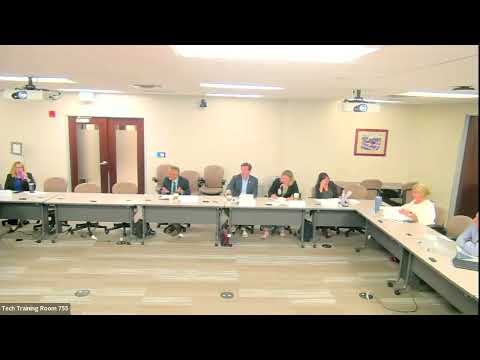
The chair called the local JRAC work group to order and the membership approved minutes from the June 20 meeting by voice vote. The group then turned to an extended discussion led by Chris Bean on reshaping the 2024/25 annual report and the county survey that feeds it.
Chris Bean, a staff member, said mental health and substance abuse treatment “has been identified the last 2 or 3 years as the number 1 priority” across counties and asked members to consider revising the survey to gather more substantive data—provider capacity, wait-list times and service gaps—rather than only basic administrative items. Bean also proposed moving toward quarterly, topic-focused submissions so the annual report could serve as a summary of more granular, recurring feedback.
Why it matters: Members said that more detailed and timely information could help the state respond to county needs and make the case to the general assembly and the executive branch for targeted resources. One member urged that the survey include a catch-all question asking how counties are being affected by recent grant reductions and tax changes so local fiscal strain is captured and can inform state-level decisions.
A central focus of the meeting was opioid settlement funding. Bean said the current survey found that only 57% of respondents reported having discussed opioid settlement funds locally. He proposed adding more detailed questions—total settlement amounts received, how funds are allocated and whether counties are tracking expenditures against settlement terms.
Participants described widely varying local governance: some counties give JRAC direct control of opioid funds; others do not. One example cited at the meeting was Grant County, where local commissioners passed a resolution to assume control of opioid settlement money and disband a JRAC subcommittee that had been advising on those dollars.
Speakers raised compliance risks tied to the national settlements. A committee member warned that the Purdue Pharma settlement includes provisions that could allow administrators to claw back funds if they are not spent according to the settlement’s terms, and urged stricter oversight and education so counties avoid ineligible expenditures. A staff member said his review of expenditures had identified categories that frequently appear unallowable—often law-enforcement equipment or general accounting uses—and said that so far unallowable items appeared to be a small share of total spending.
Members recommended several practical responses: expand the survey’s opioid-section to capture amounts and recipients, produce best-practice guides and short recorded conversations (for example, a recorded exchange between technical staff and field practitioners explaining allowable uses), and create a communications hub or “one-stop shop” of searchable county resources and success stories. Bean and others supported the idea of county spotlights and a communications subcommittee to make practical materials available to smaller counties that do not have the same capacity as urban jurisdictions.
Several members also discussed governance options that might reduce duplication—one county’s example of merging probation and community corrections under the judiciary was offered as a model that produced efficiencies in that jurisdiction, though participants cautioned such consolidation carries legal and administrative complexity and would not be appropriate everywhere.
The work group discussed data capacity and the state’s effort to improve grant-management tools. Participants noted an ongoing transition from the Intelligrants system toward Olona and the creation of dashboards that could help cross-reference grant awards and expenditures across agencies.
The meeting closed with Bean asking for written suggestions on survey priorities and members volunteering to provide technical support and examples; the chair adjourned the session.
Votes and formal actions: the only recorded formal action in this session was approval of the June 20 minutes (motion moved by Doug; seconded by Judge Spitzer; approved by voice vote). The meeting did not include roll-call vote tallies or final policy enactments.
Next steps: Members asked staff to expand opioid-specific survey questions, explore a quarterly reporting cadence and develop accessible resources (recorded Q&A, county spotlights and a centralized hub) to help counties use settlement funds in compliance with settlement terms.