Get Full Government Meeting Transcripts, Videos, & Alerts Forever!
Get email alerts on the Judicial Salaries topic
No spam. Unsubscribe anytime.
Judges tell council pay lag, retirements and workloads threaten recruitment; MDJA backs two 6% raises and statutory fix
Summary
The Minnesota District Judges Association urged the Compensation Council to restore recent purchasing power by recommending 6% raises for FY27 and FY28 and to pursue a statutory change making council judicial pay recommendations prescriptive; presenters cited falling competitiveness, higher retirements and 40‑judge shortfall estimates.
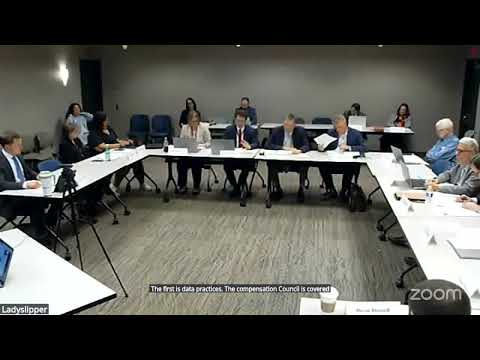
The Minnesota District Judges Association (MDJA) told the Compensation Council that declining judicial purchasing power, rising workloads and increasing retirements are harming recruitment and retention and urged the council to recommend 6% pay increases in each of the next two fiscal years plus a statutory change to make the council’s judicial recommendations prescriptive unless the legislature affirmatively modifies them.
Professor King Began (St. Cloud State University), who coauthored MDJA’s economic memo, said trial‑court judge pay currently appears at $190,117 and has been unchanged since July 2024; he told the council that local labor‑market comparisons show upper‑quartile Twin Cities lawyers earn roughly $219,710, and that the combination of stagnant pay, higher workloads and private‑sector offers has led to increased retirements and more judges signaling earlier exits.
A speaker representing MDJA’s leadership (the association president, who identified the organization and role but did not state a personal name on the record) described the association’s package as “6 and 6 plus a fix”: two consecutive 6% increases and a targeted statutory amendment so that judicial salary recommendations take effect by default unless the legislature amends them. The MDJA president argued the change would reduce the structural bias toward nonenactment and improve the council’s chance of restoring lost buying power.
Council members raised constitutional and budget questions. One member noted Article VI, Section 5 concerns and said there is legal disagreement over whether a prescriptive change would conflict with the legislature’s constitutional authority to set judicial pay. Members also discussed the cost of adding judgeships (MDJA cited an estimated shortfall of about 40 judges) and tradeoffs between funding more judgeships and raising pay for existing judges. Several members asked MDJA to provide more district‑by‑district applicant and turnover data; staff said they had requested application counts from the Judicial Selection Commission and would share additional data before the July meeting.
The council did not vote on judicial salaries at the Jan. 15 meeting; members asked staff to present more district‑level applicant and turnover data and scheduled July and August follow-ups. MDJA said it would keep surveying lawyers and update the council as new applicant/turnover data arrive.