Get Full Government Meeting Transcripts, Videos, & Alerts Forever!
Get email alerts on the Drone Delivery topic
No spam. Unsubscribe anytime.
Wing describes drone‑delivery operations, safety practices and plans to expand to Atlanta
Summary
Wing Aviation told the committee it operates as a Part 135 air carrier (a subsidiary of Alphabet), has completed 400,000 deliveries globally, and plans expansion into the Atlanta metro in 2025; lawmakers asked about DOT vs FAA authority, landing sites, workforce development and prescription‑delivery pilots.
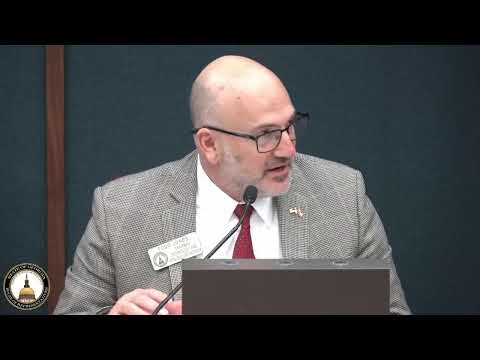
Bailey Edwards, government‑affairs lead for Wing Aviation LLC, told the committee Wing is a Part 135 air carrier and a subsidiary of Alphabet, and said the company has completed more than 400,000 deliveries globally. "We are a wholly owned subsidiary of Alphabet," Edwards said, describing partnerships with retail and delivery platforms including Walmart and DoorDash.
Edwards gave technical details: the aircraft weighs about 11.5 pounds, carries roughly a 2.5‑pound payload, operates about 30 meters above treetops, and cruises near 60 miles per hour. He explained Wing uses an automated routing platform overseen by pilots in a flight operations center and programs geospatial restrictions to limit constant overflight of residential properties.
On regulatory and operational questions, Edwards emphasized that Wing flies to the contours of its FAA operation specifications and coordinates with federal authorities for airspace and landing‑site approvals. In response to a lawmaker asking whether the Department of Transportation would regulate landing surfaces, Edwards said DOT and FAA have distinct regulatory roles and that Wing would adhere to FAA certificate requirements.
Committee members asked about local partnerships, customer opt‑in, fees, workforce pipelines and health‑care deliveries. Edwards said Wing works with property partners (for example, uses parking‑lot sites in partnership deals) and that customers must opt into eligible delivery service areas. He referenced pharmacy delivery pilots in other states and noted that Prime Air and others have sought state pharmacy approvals in Texas; Wing said it is studying similar models and working with legal teams on state pharmacy requirements.
Edwards described community engagement and STEM workforce outreach used in other markets and said Wing hopes to seed similar programs in the Atlanta area.
Next steps: Wing will continue outreach with executive leaders and local stakeholders as it pursues FAA approvals required for expansion into the Atlanta metro.