Get Full Government Meeting Transcripts, Videos, & Alerts Forever!
Get email alerts on the Zoning Rezoning topic
No spam. Unsubscribe anytime.
Property owner seeks rezoning to allow outdoor boat and camper storage on Central Street parcel
Summary
A property owner asked the Atlanta planning commission to allow outdoor storage for boats and campers on a 2‑acre Central Street parcel currently zoned agricultural. Staff said agricultural zoning limits such uses and will advise whether rezoning, a variance, or a special exception is required.
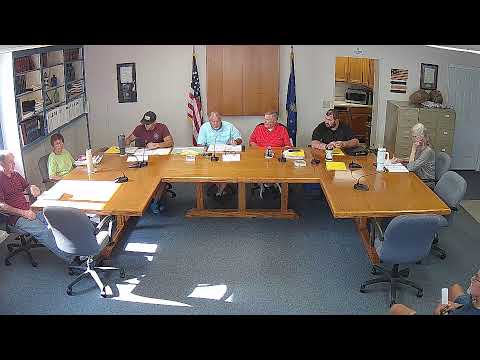
A resident asked the Atlanta Planning Commission to approve either a rezoning or another zoning path to permit outdoor storage of boats and campers behind a house on a 2‑acre parcel on Central Street.
The applicant, who identified himself only as a resident, told commissioners the site has some prior commercial history and that he planned to operate an affordably priced outdoor storage facility with screening and an automatic gate. “They’re wanting to create a outdoor storage, like boats, campers on their property,” a staff member said, reading the request to the commission. The resident said: “I’ve been doing this for about 15 years, and I’ve not generated a claim.”
Commission staff and members reviewed the town’s zoning text and told the applicant that agricultural zoning typically permits farm storage but does not allow general commercial outdoor storage. Staff pointed out that outdoor storage as a non‑farm commercial use appears in the ordinance as a special exception or as part of certain business (C2/C3) classifications. “Outside storage facility shall be enclosed with a privacy fence,” a staff member said when reading the business‑use standard.
Commissioners discussed two possible paths: rezoning the 2‑acre parcel to a commercial classification (C2 requires a two‑acre minimum) or pursuing a special‑exception/variance route. Commissioners noted that C3 allows mini‑storage uses but has a three‑acre minimum and different standards. A commission member summarized the process: applicants must notify nearby property owners, submit an application, and in many cases seek review by the Board of Zoning Appeals if a variance or special exception is required.
The chair said staff would consult the town attorney to clarify the correct procedural route, the required notice radius, and the specific standards that apply to outdoor storage uses. “If I can talk to our attorneys and we can get that to you, at least you’d have a better understanding,” the chair said. Commissioners agreed to return the item to a future plan commission meeting if the applicant chooses to proceed.
What happens next: staff will report back with a recommended procedural path (rezoning vs. special exception/variance) and a list of required notices and standards. If the applicant proceeds, the commission will set a hearing with public notice.