Get Full Government Meeting Transcripts, Videos, & Alerts Forever!
Get email alerts on the Housing Code Enforcement topic
No spam. Unsubscribe anytime.
Resident urges town action on ‘slum tenement’ conditions in Broad Brook; selectman points to enforcement channels
Summary
A Broad Brook resident told the Board of Selectmen about alleged hazardous conditions, mold and nonworking fire alarms at a Main Street rental and urged enforcement; the First Selectman responded by outlining which agencies handle specific complaints and noted the town lacks a blight ordinance after a prior town vote.
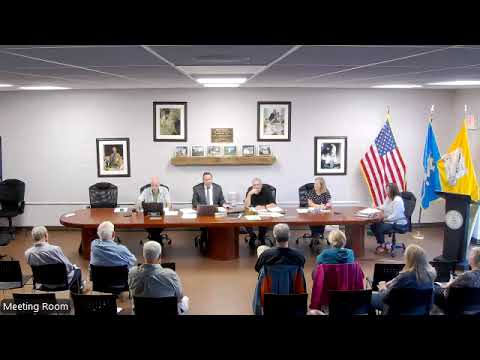
Michael Poville, who identified himself as living at 90 Main Street in Broad Brook, told the Board of Selectmen on the meeting’s public-comment period that he has spent "three and a half years living in a slum tenement" with falling paint, black mold, groundwater intrusion and what he described as nonfunctional fire doors and alarms.
"There must be a half dozen junks out there that are unregistered," Poville said, and he added that his building lacks required handicap parking despite his cardiac and mobility conditions. "Nobody seems to give a ****. That is an absolute eyesore," he said, asking the board to point him toward enforcement resources.
First Selectman (first referenced here by role) responded directly during the meeting, saying age-based criticisms of town employees were inappropriate and then explaining where different complaints should be directed: criminal matters to the police, fire-code issues to the fire marshal, building-condition and code compliance issues to the building official, and parking concerns to planning and zoning. The First Selectman said residents were following "the proper course" in reporting problems and acknowledged ongoing conversations about enforcement capacity.
On the specific question of a blight ordinance, the First Selectman said a previous version of a blight ordinance had been presented to a town meeting and was rejected by voters "about 60–40," leaving the board without that enforcement authority. He told Poville the town cannot exercise powers that the voters did not authorize and encouraged continued use of the established channels for code and safety enforcement.
The exchange included a brief back-and-forth about what municipal departments can and cannot do and emphasized that some remedies are outside the board’s authority absent legislative change. The meeting did not record the board announcing a specific enforcement action in response to Poville’s complaint; the First Selectman said staff would continue to discuss possible improvements in enforcement approaches.
The public-comment period also included several other residents who raised municipal concerns ranging from flag maintenance to park improvements and questions about the budget process. The board affirmed procedures for following up: residents should contact the department that has jurisdiction for the problem they are reporting, and code- or health-related complaints will be routed to the appropriate official for investigation.
The board did not take formal action on Mr. Poville’s complaint during the meeting; he was advised to pursue the channels named by the First Selectman and other town officials.