Get Full Government Meeting Transcripts, Videos, & Alerts Forever!
Get email alerts on the Student Device Policy topic
No spam. Unsubscribe anytime.
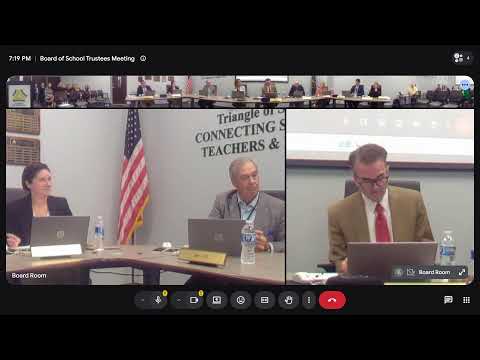
Penn‑Harris‑Madison board hears Penn High year‑end report and adopts bell‑to‑bell student device expectations
Summary
Penn High School leaders briefed the board on the new state accountability model, test and credential gains, and a new bell‑to‑bell personal‑communication‑device policy requiring devices powered off and stored in bags during school hours with a progressive discipline system; the board heard questions and signaled districtwide implementation steps.
Penn‑Harris‑Madison (PHM) school leaders presented a Penn High School year‑end report on June 7 that highlighted academic and career‑readiness gains and introduced a bell‑to‑bell policy for student personal communication devices.
Rachel Frey, who led the Penn High presentation, said the high school met several district goals under Indiana’s new accountability model and pointed to progress on graduation and college‑and‑career indicators. “For the first time, we've reached that benchmark of being 20% above the state average” on the SAT, she said, and noted increases in AP enrollment, dual‑credit offerings and early‑college credentials including associate degrees and Indiana College Corps awards.
Associate principal Jeanne Mitchell reviewed the new on‑track measure for 9th‑grade students, reporting 88% of the current 9th‑grade cohort met the metric (which requires credits plus subject‑area standards), and described supports to return off‑track students to course success.
A separate presentation from school administrators outlined a bell‑to‑bell personal‑communication‑device rule for Penn High School that applies to phones, smartwatches, tablets, earbuds and similar devices. “It is our expectation that phones…are going to be powered off and placed and stored in those bags and remain out of sight and not in use during the school day,” the presenting administrator said. Under the proposed progressive discipline system: a first offense results in a classroom phone holder and after‑school detention; a second offense leads to confiscation and return at the end of the day; a third offense requires a parent or guardian to pick up the device; a fourth offense increases the hold time to two school days; and a fifth offense requires daily check‑in/check‑out and a parent meeting to develop interventions.
The presenters said the legislation governing communication devices does not dictate a single storage method, so PHM proposes using students’ existing bags as the practical storage solution and encouraging teachers to ask students to place bags at the front or back of classrooms. The administration emphasized accommodations for students with 504 plans, IEPs or documented health needs: “These will continue to be individualized based on case conference committee decisions,” the administrator said, and staff will work with parents and nursing staff to preserve required health‑related access.
Board members asked about enforcement in hallways and the lunchroom; presenters said staff will redirect students when observed and that repeat noncompliance will be referred to deans and administrators under the graduated discipline plan. The administration also said confiscated devices will be stored securely in the main office and that final check‑in/storage procedures are still being finalized.
School leaders framed the policy as part of a broader effort to support engagement and to align school expectations with enforceable, practical procedures before full implementation. The district plans continued communication to families through ParentSquare, summer messaging and student‑focused resources for freshmen and mentors so students return in August aware of the expectations.
The presentation also highlighted Penn High School’s career and technical education (CTE) figures: roughly 91% of the senior class took at least one CTE course during high school; seniors earned 412 credentials and juniors added 274; and students logged nearly 100,000 work‑based learning hours across grades. Leaders said the district will continue work‑based learning, signing days (including the first trades signing day this year) and supports that connect students to post‑graduation options.
The board received the report and asked presenters to return with finalized procedures and communications details for parents and staff. No formal board action on the device policy was recorded at this meeting; the presentation was framed as an implementation plan and preview of fall expectations.