Get Full Government Meeting Transcripts, Videos, & Alerts Forever!
Get email alerts on the Ai Disclosure Bill topic
No spam. Unsubscribe anytime.
Rep. Kendrick urges mandatory disclaimers for AI-generated commercial images and video
Summary
Representative Kendrick told a House committee that House Bill 478 would require consumer-facing disclaimers on images and videos produced by artificial intelligence when used in commerce, citing OCGA provisions and consumer-protection aims; members raised concerns about small-business burdens and cross‑jurisdictional reach.
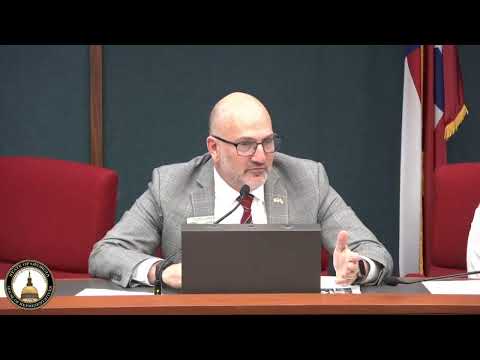
Representative Kendrick presented House Bill 478 to a legislative committee, saying the measure would require a visible disclaimer on material generated by artificial intelligence when used in trade or commerce to inform consumers.
"The purpose of it is to bring some sunshine," Kendrick said, explaining that the bill would not limit content but would require disclosure so consumers know images or video were AI-generated. She pointed members to cited code sections in the packet, including OCGA 10-1-397 and the Fair Business Practices Act definitions in OCGA 10-1-392.
Members asked about scope and placement. Representative Barnes sought clarification whether the bill covered only still images; Kendrick replied the definition includes video files and recordings. Kendrick described a visual-contrast approach rather than strict placement rules: disclaimers must be legible against background pixels and meet the bill’s contrast criteria rather than be fixed to a single corner.
Several lawmakers expressed concern about burdening small businesses and low-impact commercial uses. One member cited food photography and commercials that use stylization to present products attractively, asking whether such examples should require disclosure. Kendrick responded the bill is limited to commercial use and that, under the Fair Business Practices Act, enforcement would fall to the attorney general, who could issue warnings or cease-and-desist orders before pursuing harsher penalties.
Representative Evans asked about out-of-state broadcasts and whether the statute should explicitly mention nonresidents. Legislative counsel Ali Rad said Georgia's long-arm jurisdiction likely covers out-of-state actors who engage in commerce with Georgia residents but that adding explicit language for clarity would be acceptable.
Committee members recounted real-world harms the bill aims to address. Secretary Earhart described a recent Cobb County meeting in which an AI-generated clip showing the president endorsing a local candidate temporarily misled attendees until organizers disclosed the video’s origin.
The committee took no formal votes. The chair said members should submit drafting changes to legislative counsel and announced the committee will reconvene the next day to consider amendments and possible motions on HB 478.