Get Full Government Meeting Transcripts, Videos, & Alerts Forever!
Get email alerts on the Election Integrity Ai topic
No spam. Unsubscribe anytime.
Georgia committee debates bill to criminalize deepfake election content, require AI disclosure in political ads
Summary
A House committee reviewed a substitute to HB 986 that would define AI in state law, require disclosures on generative-AI political ads, and create new election‑related offenses and sentence enhancements for AI-enabled crimes; members pressed the sponsor on venue, prosecutorial referral and First Amendment limits.
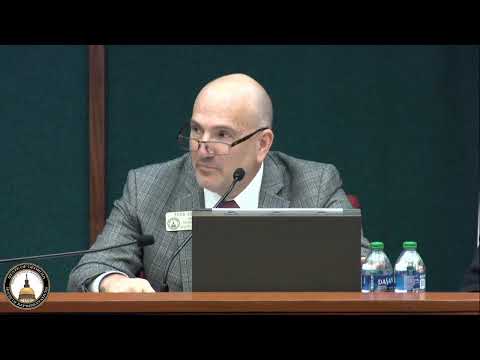
Representative Robert Thomas presented a substitute to House Bill 986 on the House Technology and Infrastructure Innovation committee, proposing a statutory definition of "artificial intelligence system," disclosure requirements for generative-AI campaign advertisements and new or enhanced criminal penalties for materially deceptive AI-generated media aimed at influencing elections.
The bill, the sponsor said, would criminalize knowingly uploading “materially deceptive media” that appears to depict a real person saying or doing something that did not occur when done within 90 days of an election and with intent to deceive electors. "We kept that 90 days in there because it's very prescriptive," Representative Robert Thomas said, adding that the time limit ties the offense to an election and is intended to help the draft survive constitutional review.
Why it matters: The bill aims to address increasingly realistic synthetic media — often called deepfakes — by combining disclosure rules for campaign ads with a narrowly framed criminal offense, plus sentencing enhancements when AI is used to commit other listed crimes such as child exploitation.
The substitute contains several central parts: a statutory AI definition designed to be durable; a campaign‑specific disclosure requirement for generative‑AI advertisements; a criminal offense of "fraudulent election interference" with a 90‑day election window; and enhancements that raise penalties when AI is used in certain crimes. Representative Thomas said the text was drafted to thread the needle between protecting speech and preventing fraud.
Committee members asked technical and constitutional questions. Chairman Prince and others pressed whether district attorneys as well as the attorney general would be able to prosecute. "The Georgia Constitution says that when a felony crime is being prosecuted in the superior court, the district attorney is [the] representative of the state," Robert Smith, general counsel for the prosecuting attorneys, told the committee, arguing that exclusive AG jurisdiction is problematic and that concurrent authority is typical. The sponsor acknowledged the concern and said the draft's exclusive‑jurisdiction language would be revised to permit referral to local prosecutors where appropriate.
On scope, members worried about common image‑editing tools that increasingly include AI features. Representative Thomas said the bill is aimed at content created "through the use of an artificial intelligence system," and that conventional manual edits were not the bill's target: "Photoshop is not an artificial intelligence system," he said, explaining that the draft would exempt such manual edits as currently written while covering AI‑generated media.
Representative Evans pushed back on narrowing the statute for constitutional defense: "There is no 1st Amendment right to lie," Evans said during debate, stressing the committee's interest in protecting both speech and election integrity.
Gaps and next steps: The sponsor and members agreed the statutory definition of AI appears in multiple sections and may need cleanup; lawmakers asked the sponsor to work with legislative counsel, the Georgia Technology Authority (GTA) and David Amati's office on campaign‑transparency language and criminal‑law details. Representative Thomas said the committee will coordinate with the judiciary committee to vet venue and prosecutorial issues and to refine First Amendment carve-outs before moving the measure further.
The committee took no formal final vote on the HB 986 substitute; the chair said the committee would reconvene or hold a joint session with judiciary members for additional review.