Get Full Government Meeting Transcripts, Videos, & Alerts Forever!
Get email alerts on the Operating Budget topic
No spam. Unsubscribe anytime.
Waterville Valley select board approves $7 million 2026 operating budget after cuts and trade-offs
Summary
The Waterville Valley Select Board approved a $7,000,000 operating budget for 2026 after across-the-board line-item cuts, voters’ directive implementation and debate over nonprofit support, recruitment funding and contingency levels.
The Waterville Valley Select Board approved a $7,000,000 operating budget for 2026 on March 23, finalizing a plan the chair said reflected the voters’ March 10 directive and reduced the board’s prior proposal by $514,000.
The board’s chair, Richard, told attendees the figure leaves the town’s 2026 operating budget essentially flat with 2025 after required debt-service payments — an increase of about $36,000 — and that the board had followed four guiding principles: avoid counting speculative revenues, preserve previously approved municipal services, support staff recruitment and retention, and target cuts to parts, maintenance, supplies and discretionary spending. “The select board heard the voters and per their directive on March 10 created a $7,000,000 operating budget for 2026, which cut 514,000 from the select board's proposed budget,” Richard said.
Why it matters: the cuts prioritize personnel stability but trim many small departmental lines and community-support items, a combination the board said will hold the municipal tax-rate impact from the operating budget alone to about $0.05 per $1,000 in assessed value. The chair cautioned that rising debt service, including for a planned wastewater treatment facility, will likely force future increases.
What was cut and why: staff presented a set of targeted reductions that together met the $7 million cap. Departmental trims included reductions to road line-striping and summer maintenance, scaled-back parks-and-recreation special-events spending, postponing replacement of some police patrol rifles and deferring a set of fire-gear replacements. Recreation staff also proposed eliminating or reducing items such as porta-potties at Packard Field, a planned entrance sign and some programming lines; board members and staff repeatedly noted the reductions risked eroding the town’s summer appearance and program offerings.
On recruitment and contingency: the board reduced a proposed $50,000 recruitment line to about $23,000 with $9,000 already committed; members said recruitment funding could be used for signing bonuses or relocation assistance for critical hires in wastewater and public works tied to the new treatment plant. The board set contingency around the $70,000–$85,000 range during final adjustments and said contingency would be the source for unforeseen overages.
Community events and revenue-generating programs: the board debated the $6,000 fishing-derby line and whether the town should buy trout to control the pond’s leech population. Recreation staff noted the derby typically brings about $4,000 in revenue; the board agreed to preserve a reduced fish/maintenance line (proposed $2,000–$3,000) while encouraging outside donations to fund entertainment and prizes.
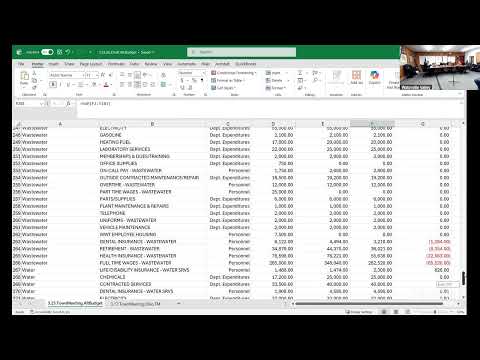
The vote: a board member moved to approve the amended budget as displayed on the meeting screen; another member seconded and the board voted in favor. The chair then moved the meeting into a nonpublic session on an unrelated legal matter. The motion as presented on the record was: “That we approve the budget as has been amended this latest iteration.”
What’s next: the board said the operating budget will be finalized for tax-rate setting in October when revenues are confirmed. The chair and staff also said the arrival of a new town manager is imminent and that a financial-advisory committee will review longer-term spending and staffing structures.
Sources: staff presentation and Select Board discussion during the March 23 special meeting; on-the-record public comments about nonprofit and trail funding informed the board’s deliberations.