Get Full Government Meeting Transcripts, Videos, & Alerts Forever!
Get email alerts on the Zoning Amendment topic
No spam. Unsubscribe anytime.
Planning board debates rewriting lot‑size rules and adding a "rural character" definition; commercial solar arrays questioned
Summary
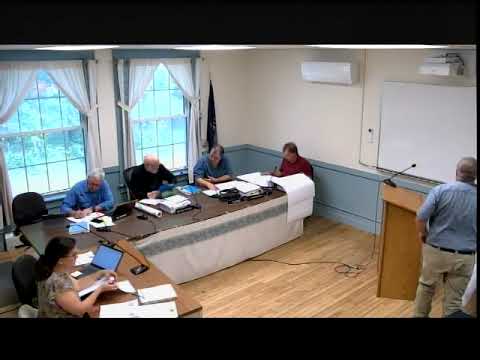
Members of the Weare Planning Board discussed a proposed rewrite of Article 14.1 to clarify minimum lot sizes by road surface, debated adding a regulatory definition of "rural character," and considered asking the town attorney about legally prohibiting commercial solar arrays; staff also flagged an impact‑fee webinar and statutory prerequisites.
At its meeting, the Weare Planning Board took up a set of zoning‑related proposals and a master‑plan initiative intended to clarify how the town defines and manages its rural character.
Committee member (Speaker 4) proposed rewriting Article 14.1 to separate lot‑size rules by road surface — creating an Article 14.1.0.1 that would require 10‑acre minimum lots on gravel roads and a separate provision for parcels on paved roads, with rural agricultural parcels governed under section 14.3. Speaker 4 said confusion arises when residents read a single paragraph that mixes gravel/paved road rules and rural agricultural exceptions.
Board members discussed implications: some noted that paving a road later could change a parcel’s subdividability if the ordinance ties minimum lot sizes to road surfacing. Speaker 1 urged the board to adopt a clear regulatory definition of "rural character" in the master plan and zoning so staff and future applicants have consistent guidance. "The purpose of this committee is not just to take in and tell us what you wanna do, make a plan, make sure it meets all our zoning, but does it meet the vision of the people?" Speaker 1 said.
Members also discussed solar arrays. Speaker 1 suggested prohibiting commercial solar arrays (allowing residential systems that support a home) because large commercial installations could dominate rural vistas and often require proximity to high‑voltage lines. Board members agreed legal review is needed before adopting prohibitions.
In other business, staff (Speaker 2) shared information about a June 25 webinar on impact fees; the board reviewed statutory prerequisites (master plan, capital improvements program and a cost‑of‑service study) and noted that adopting impact fees can be administratively and financially burdensome.
Why it matters: The proposals would change how the town interprets lot‑size rules and could add enforceable guidance about rural character, affecting property owners, developers and conservation interests. A restriction on commercial solar arrays or adoption of impact fees would require legal review and additional studies before implementation.
What’s next: Board members asked Speaker 4 to refine the Article 14.1 language and to consult with counsel on the legality of prohibiting commercial solar arrays; members were encouraged to attend the impact‑fee webinar to better understand statutory obligations.