Get Full Government Meeting Transcripts, Videos, & Alerts Forever!
Get email alerts on the Bridge Infrastructure topic
No spam. Unsubscribe anytime.
Consultants present River Road bridge replacement plan to Weare Conservation Commission; team says wetlands avoided and abutments can be reused
Summary
Jacobs and Normandale Associates presented a 30% bridge‑replacement design for the River Road bridge, saying the proposal keeps the 26‑foot roadway, raises the profile slightly for hydraulics, avoids direct wetlands impacts and will seek federal and state permits before bidding.
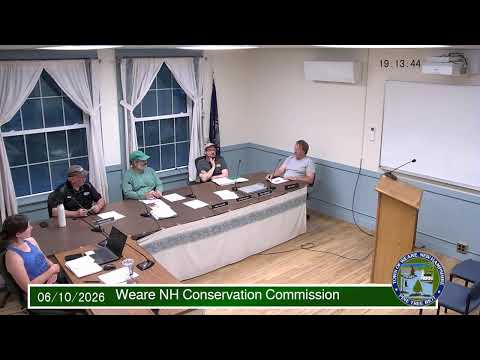
Tom Marshall, project manager for Jacobs, told the Weare Conservation Commission on June 10 that Jacobs has advanced a 30% design to replace the River Road bridge and is coordinating permitting and contracting with the town.
Marshall said the replacement would match the existing 26‑foot roadway width and horizontal alignment, raise the vertical profile by roughly six inches for hydraulic reasons, and use a steel‑girder, concrete‑deck configuration rather than the existing truss. He said engineers intend to salvage and reuse existing abutment footings where geotechnical borings confirmed bedrock, limiting excavation and disturbance.
The project matters to residents because it sits over a New Hampshire‑designated river corridor and lies adjacent to several delineated wetlands. "According to designs that I've looked at, there are no impacts to any of these wetlands. We've managed to avoid impacts to all of them," Elizabeth Oliver of Normandale Associates told commissioners after summarizing a 2022 wetland delineation and state natural‑heritage data checks that returned records or suitable habitat for several turtle species and other species of concern.
Oliver said the team is conducting formal consultations with the New Hampshire division of ecological services and the U.S. Fish and Wildlife Service to address records for Blanding's, spotted and wood turtles and potential habitat for a northern long‑eared bat and a listed plant. She also outlined required permits: a federal NEPA review tied to federal construction funding; an NHDES standard dredge‑and‑fill permit for the proposed seven feet of impact below top of bank/ordinary high water; a NHDES shoreland permit because the river is state‑designated; Army Corps coverage under an appropriate nationwide permit; and a NHDES construction general permit plus a stormwater pollution prevention plan.
Marshall described erosion‑control measures and landscaping changes intended to reduce exposed rock at wing walls, noting riprap slopes would be dressed with organic loam and vegetation and stabilized with environmentally friendly netting. He said the span is roughly 110 feet and that the preferred alternative was chosen after public input and prior study work.
On scheduling, Marshall said funding is available but the work is contingent on permitting. The team expects to submit final plans in the fall and bid so construction could occur next season; the plan anticipates a full bridge closure with a detour rather than a temporary bridge, which the team said would reduce cost, delay and environmental impact. "We'll probably be submitting final plans in the fall with the intent of bidding it as early as we can so that you can capitalize on the entire construction season," Marshall said.
Marshall also explained Jacobs' role: Jacobs is the project designer, will assist with bid documents and maintain a limited role during construction, but the town will be required to hire a separate day‑to‑day construction observer by Federal Highway practice to avoid a designer‑overseer conflict.
The commission asked about pedestrian and small‑craft navigation; Marshall said no shoulders or bikeways are proposed and that the new rail is a low two‑bar steel rail roughly 30–31 inches above pavement. Elizabeth said hydrology and bedrock at the site indicated the bed below the bridge is stable. The presenters encouraged commissioners to review covenant or deed language for a nearby town‑owned parcel that will be affected and offered to be reachable through town staff if commissioners identify items to integrate into future permit applications.
Next procedural steps: the project team will submit permit applications to NHDES, the Army Corps and the relevant federal reviewers; the commission should expect to see the permit applications later this summer and in fall sessions for comment and review before final plans are filed.