Get Full Government Meeting Transcripts, Videos, & Alerts Forever!
Get email alerts on the Parking Management topic
No spam. Unsubscribe anytime.
Nevada City parking pilot produces mixed results; council directs procurement and further study
Summary
After 18 months of pilots, city staff recommended returning on‑street smart meters to the vendor, expanding coin meters or considering block kiosks, and investigating metering the Spring Street lot; council directed staff to begin procurement with options for technology and permit programs.
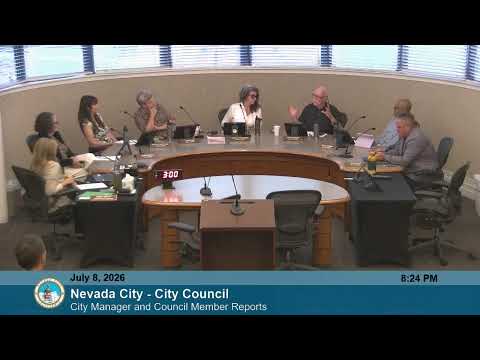
City engineers and council members debated downtown parking options at the July 8 Nevada City Council meeting after staff reviewed two pilot projects and a 2023 parking study.
City Engineer Brian McAllister summarized the pilots: a Commercial Street pilot that added a meter kiosk and ParkMobile (about one‑third of users used the app) and an 18‑month trial of on‑street smart meters that proved problematic because of battery/solar issues, visibility and user interface confusion. McAllister told the council that the city had waived citations at times because users believed they had paid when they had not.
"Based on the challenges experienced, we would recommend not using the smart meters and just return those to the vendor," McAllister said, and proposed options including repurposing removed meters to other lots, expanding coin meters, implementing paid parking at the 37‑space Spring Street lot, continuing Nevada Street as a free employee option, expanding an employee permit program, and coordinating signage with the county lots.
Business representatives and the Chamber urged the city to replace quarter‑only meters because visitors and merchants struggle to obtain enough quarters and because meters also function as event no‑parking posts. Lynn Scruggrood of the Nevada City Chamber said the meter design and the quarter requirement are recurrent visitor complaints and urged an aggressive move toward better payment solutions.
Council members weighed modernization against historic character, accessibility and enforcement needs. Some favored block kiosks and integrated systems that allow cards, tap pay and apps and enable dynamic (event/surge) pricing; others cautioned about visual impact on the historic downtown and emphasized that technology should implement policy goals like turnover and merchant convenience, not drive them.
Council gave staff direction to proceed to procurement with options and returned recommendations (including kiosk and permit program options) for adoption, asking staff to prioritize ways to make payment easier for visitors and to consider metering or other management of the Spring Street and Clark Street lots.