Get Full Government Meeting Transcripts, Videos, & Alerts Forever!
Get email alerts on the Parking Variation topic
No spam. Unsubscribe anytime.
Elgin planning commission denies parking variance for salon-to-bar at 301 Dundee Avenue
Summary
The Elgin Planning and Zoning Commission voted 3–4 July 6 to deny a requested parking-variation that would have allowed a 1,000 sq ft drinking place with six video‑gaming terminals at Casa de Estillos, citing incompatibility with surrounding land use and the comprehensive plan.
The Elgin Planning and Zoning Commission voted 3–4 on July 6 to deny a request to establish a small drinking place with six video‑gaming terminals inside Casa de Estillos at 301 Dundee Avenue.
City planning staff told the commission the proposal would convert roughly 1,000 square feet of the existing 4,700 sq ft salon into an accessory drinking area and add up to six video gaming terminals, a use allowed only as accessory to a drinking establishment. The site has 14 on‑site parking spaces; staff and the applicant argued that on‑street parking plus operator parking studies demonstrate the actual parking demand would be far lower than the ordinance requirement of 30 spaces. Staff recommended approval with two principal conditions in the staff report: the bar must match the salon’s hours of operation and it may not have separate exterior signage.
“The applicant’s counts at three comparable locations show most peak periods needing only three parking spaces, and nearly half the counts had no customers,” city planner Demir said during the staff presentation.
Applicant Oscar Zamudio — who said the business has operated as a salon at the address since 1988 — told the commission the addition would be beer‑and‑wine only, appointment‑driven, and primarily intended as an amenity for salon customers. “It’s not going to be a nightclub or a place where people hang out for hours,” Zamudio said, adding that the salon would remain the primary business and that the 21‑plus drinking area would be partitioned and carded at all times.
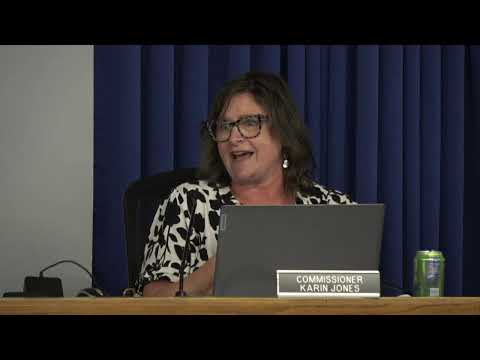
Several commissioners praised the applicant’s longevity and the concept of business innovation but expressed concerns about the site’s compatibility with surrounding land uses, the effect of signage on attracting additional customers, and whether the salon hours limit would be enforceable. Commissioner Jones said he liked the innovation but that limiting signage and hours might unnecessarily restrain growth; Chair Wildermuth said he supported the idea in principle but felt the proposal did not align with the zoning district and comprehensive‑plan guidance for the area and explained his no vote along those lines.
Commissioner Jones moved to approve the variance subject to conditions in the staff report; Commissioner Buscay seconded. The motion failed on a 3–4 roll call. The chair urged the applicant to continue working with staff on possible revisions.
The zoning variance is a final determination by the Planning and Zoning Commission; separately, any liquor license would follow a different approval path through the Liquor Commission and city council if the applicant pursues that route.