Get Full Government Meeting Transcripts, Videos, & Alerts Forever!
Get email alerts on the Childcare In Schools topic
No spam. Unsubscribe anytime.
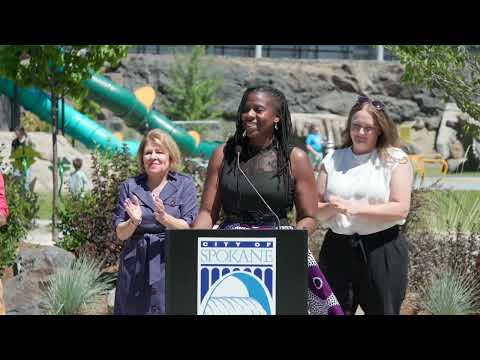
Mayor Brown announces pilot to bring affordable childcare into Spokane schools
Summary
Mayor Lisa Brown announced a pilot with Spokane Public Schools and local providers to place affordable birth-to-3 childcare programs inside select neighborhood schools; city officials said contracts are being finalized for a planned fall start and sites will be announced in the coming weeks.
Mayor Lisa Brown announced a pilot program aimed at increasing access to affordable, neighborhood-based childcare by using space inside select Spokane Public Schools.
"Today, we're announcing a pilot program that will increase access to affordable, accessible childcare for Spokane's littlest learners," Brown said, identifying local partners including the YMCA, Ray's Early Learning and Lilac City Early Learning.
The pilot will have the city lead efforts to identify and partner with qualified childcare providers to operate services in school facilities while the district provides space, Brown said. She told reporters the city is "working on the contracts right now" and that the program's goal is a fall start.
Dr. Adam Swinyard of Spokane Public Schools described the effort as a collaborative, neighborhood-focused approach that could be scaled to other sites. "The opportunity to provide child care inside opportunities. It brings that access closer into our neighborhoods," Swinyard said, adding that the district could offer other spaces if the pilot succeeds.
Local providers framed the pilot as one piece of a larger effort. Kira Bauer of Ray's Early Learning said expansion must include supports for existing centers and teachers and raised concerns about behavioral challenges in classrooms following the COVID era. "We also need to support these families that are raising these children that came as a or came out of the COVID era," she said.
A provider who has worked at statewide and local levels urged caution about expectations that space alone will lower costs. "Most of that, in my program, 85% of our revenue goes to teacher wages," the provider said, arguing that meaningful cost reductions require state investment and pay parity for early educators.
On implementation details, Brown said the city and district are finalizing site selections and logistics. Officials said they were identifying sites "most conducive for a pilot," that the pilot would not impact existing K–12 programming or preschool services already in place, and that they expect to finalize slot counts in the next few weeks and then communicate options to families.
Brown said the pilot will also help clarify licensing, permit and equipment needs for using school spaces. She added that if the model proves viable the city hopes to "take this to Olympia" to seek state support to scale the approach.
The announcement did not include named school sites, precise slot counts or a definitive contract timeline; officials repeatedly said those details are being finalized. The mayor and partners stressed the pilot is intended to expand access and reduce transportation barriers by placing services near families, while several providers said broader funding and workforce solutions will be needed to lower family costs long term.
Officials said they plan to finalize contracts and sites and begin outreach to families before the fall start date if the pilot schedule holds.