Get Full Government Meeting Transcripts, Videos, & Alerts Forever!
Get email alerts on the Cra Governance topic
No spam. Unsubscribe anytime.
Palatka CRA directs staff to tighten framework for funding city‑owned historic and cultural facilities
Summary
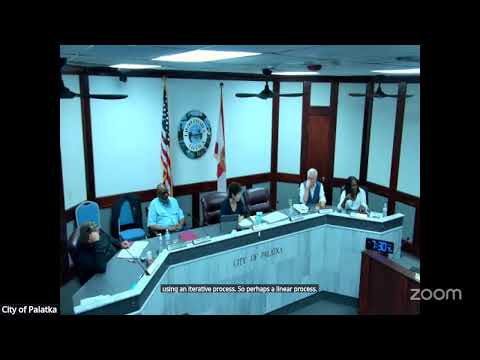
After lengthy debate about whether CRA dollars should support city‑owned buildings, the CRA board voted June 22 to ask staff to update a draft responsibility framework and to prepare a draft interlocal agreement. Commissioners pressed for guardrails to prevent unequal treatment of private property owners and clarity on county funds entering the CRA.
Staff presented a draft "historic asset and cultural facilities responsibility framework" intended to clarify when CRA funding may participate in capital improvements, deferred maintenance, ADA/code compliance and redevelopment enhancements for city‑owned historic and cultural properties within the CRA district. Facilities discussed included the Bronson Mulholland House, the Tillman House, Larimer Arts Center and the Philip Randolph Regional Multimodal Transportation Hub.
The draft framework included an example funding‑participation matrix and a set of evaluation criteria staff used in benchmarking other Florida municipalities. Staff said the matrix is illustrative and that actual funding decisions would be made case‑by‑case based on redevelopment benefit, project scope and consistency with the CRA plan.
Commissioners raised several concerns: whether CRA funds should pay for city‑owned roofs or HVAC when private businesses and homeowners have more restrictive eligibility; the need for clear vetting criteria for engineers/contractors and program eligibility; whether county contributions to the CRA fund limit or change county oversight; and the importance of aligning the CRA board and county commission on major funding decisions.
Legal and staff clarifications: the city attorney and staff explained that county contributions go to the CRA fund and the city administers expenditures under the CRA plan, that the CRA plan is being revised but remains in force until replaced, and that the CRA board’s votes are recommendations to the city commission when money is involved. The attorney noted the CRA is a separate legal agency but subject to processes that route spending through city administration.
Board action: Commissioner Davis moved that staff update the framework to reflect the board’s feedback and to draft an interlocal agreement for future review by the CRA board and city commission; the motion passed. Members asked that the draft include clearer guardrails to avoid creating a different standard for city‑owned buildings than for private property and to show how shared county funding would be handled.
Ending: Staff will return with a revised framework and a draft interlocal agreement; the board emphasized the need for more specific guidance before authorizing substantial CRA expenditures for city‑owned facilities.