Get Full Government Meeting Transcripts, Videos, & Alerts Forever!
Get email alerts on the Infrastructure Wastewater topic
No spam. Unsubscribe anytime.
Orleans seeks $750,000 OCRA grant to upgrade wastewater plant to handle high organic loads
Summary
At a public hearing, Orleans officials outlined a proposed wastewater‑plant upgrade to address persistently high organic loading; the town plans to apply for the $750,000 maximum through the Indiana Office of Community and Rural Affairs with a substantial local match and asked residents for survey responses and letters of support.
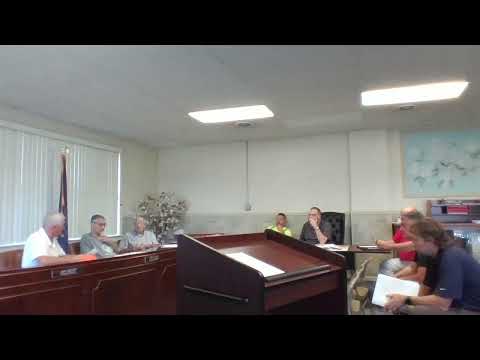
The Orleans Town Council heard a public hearing on a planned wastewater‑treatment upgrade the council hopes to partly fund with a $750,000 grant from the Indiana Office of Community and Rural Affairs (OCRA).
"The town is requesting a grant for $750,000 which is the maximum that can be requested," said Jessica Condra, project administrator with the Indiana 15 Regional Planning Commission, who outlined the application timeline and community engagement needs. Condra said local match commitments would total $879,113, producing a project estimate of $1,629,113 for the work described in the preliminary engineering report.
Engineers from Commonwealth Engineers said the upgrade aims to address high organic loading in the plant’s influent. "Capacity wise, we look fine from a flow standpoint, but the organic loading is high," said Eric Parsley, who described plans to reuse existing tankage and modify internal components so the plant can treat more concentrated wastewater.
Parsley said the town has been operating under an agreed order tied to prior violations and that the upgrades are intended to correct the operational deficiencies. "Once the operation is complete, then there is a demonstration period where we can't have any more effluent violations. And once you have successfully passed that demonstration period, then the agreed order will be lifted," Parsley said.
Plant operator Scott Sherry described influent conditions and operational responses. "We have pretty high BODs, high ammonia," he said, and urged that the proposed changes include a buffer so staff do not need to make daily adjustments. In a lighter moment he noted the practical challenge of seasonal biology: "The bugs get cold, and they go to sleep," a description of reduced biological activity in colder water temperatures.
Council members asked whether local businesses (including an egg‑washing facility that provided one high‑organic sample) or schools could be the primary source of elevated organics. Parsley and Sherry said no single point source has been definitively identified and that additional sampling is planned. They also said source pre‑treatment at businesses could help but treating at schools would not materially reduce the townwide averages.
Condra urged residents to respond to an online survey and to submit letters of support; she set a local deadline of Oct. 13 to receive materials for inclusion in the Oct. 24 OCRA submission and said a second public hearing is required before the December application. Parsley cautioned that cost estimates are still being refined: he referenced a project estimate of $1,629,113 tied to the engineering scope presented to the town, and also noted a separate broader total cost figure of $2,300,000 that staff continue to reconcile.
The council authorized staff to proceed with preparatory paperwork for the OCRA application and said officials will return with updated cost information as vendors revise proposals. The public hearing on the OCRA application was then closed and the council resumed regular business.