Get Full Government Meeting Transcripts, Videos, & Alerts Forever!
Get email alerts on the Sign Policy topic
No spam. Unsubscribe anytime.
Select Board hears competing views on sign that would read 'abortion stops the beating heart' and agrees to study town sign policy
Summary
Residents and board members traded sharply different views Thursday on a request to place an anti‑abortion sign on town property. The Select Board did not approve the sign and instead directed a future, focused agenda item to consider a signage policy and rotation rules.
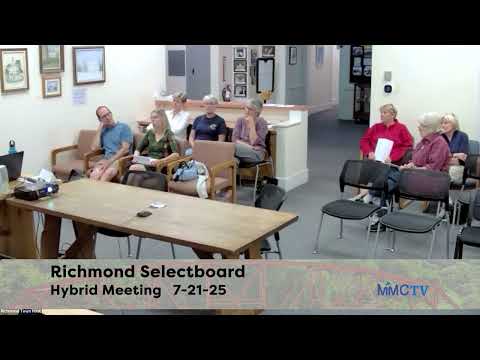
The Richmond Select Board on July 21 heard a public request to install a sign reading “abortion stops the beating heart” on the Town Center lawn and decided not to act on that single request tonight, instead deferring broader signage policy questions to a future meeting.
During public comment, the requester said she submitted a certified letter after failing to get a response from staff and argued the town should either limit what signs appear on public property or implement a rotating sign program like Milton’s. “Please consider my request and answer in the affirmative,” the requester told the board.
Several residents and board members pushed back. One resident said the current “Black Lives Matter / All are welcome” sign reflects an adopted town declaration of equity and inclusion and is not merely a partisan expression. “This is humanistic, loving support for our community members,” a commenter said, urging the board not to treat the sign as political speech.
Other speakers urged clearer labeling of the Town Center sign so members of the public understand it represents the Select Board’s viewpoint and asked the board to draft a policy for non‑campaign signage on town property. A member of the board noted legal advice that the Select Board may exercise its own speech on the town sign but emphasized that individual requests still merit public hearing and careful process.
The board concluded that the question of what can be displayed on town property and how to manage competing viewpoints is broader than the single request and directed staff to return the issue on a future agenda as a signage‑policy item. The requester’s application will be considered in that context, the board said.
The Select Board did not take a formal vote on the sign itself tonight.