Get Full Government Meeting Transcripts, Videos, & Alerts Forever!
Get email alerts on the House Bill 581 topic
No spam. Unsubscribe anytime.
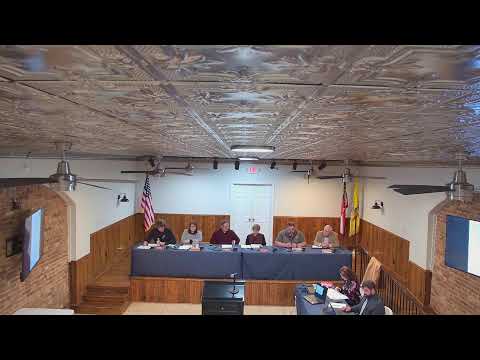
Statham council pauses vote on state property-tax change after hour-long presentation on HB 581
Summary
After an extended presentation on House Bill 581 and its local budget effects, the Statham City Council postponed a final opt-in/opt-out decision, directed staff to have paperwork ready in case a special meeting is needed before the March 1 filing deadline, and approved a motion to 'post file.'
Mayor Debbie Krause and the Statham City Council heard an hour-plus presentation Tuesday evening on House Bill 581 — the statewide "floating" homestead exemption and its companion local sales-tax funding mechanism — and chose to postpone a final decision while staff readies paperwork that would be needed to opt out before the March 1 filing deadline.
The presentation, given by a municipal presenter identified in the meeting transcript as Jody (S2), reviewed the bill’s three main elements: a statewide floating homestead exemption that offsets year-over-year assessed-value increases, an inflationary cap on taxable-value growth, and a new local option sales tax (a 'FLOST') intended to fund property-tax relief. "The law became effective on 01/01/2025," Jody told the council, adding that "the taxable value of a home may only increase at a rate of inflation each year." He warned that the state revenue commissioner — not defined in detail by the bill — will set the inflation rate and could change its methodology year to year, complicating local fiscal forecasting.
Why it matters: Statham’s fiscal presentations showed property taxes are a substantial share of the city's general fund and that HB 581 would shift revenue in ways that could force local trade-offs. Rachel (S1), who led the city’s fiscal modeling, said real and personal property taxes account for roughly $968,000 — about 29.5% of the general fund — and that public safety represents the largest share of spending (about $1,500,000 or roughly 46%). Using the city’s FY25 budget as the baseline, Rachel projected aggregate effects over five years in which the city could lose roughly $867,000 in tax revenue while cumulative taxpayer savings would be far smaller in aggregate.
Council members pressed on specific mechanics and timing. Presenters stressed that existing local exemptions (senior, teacher, public safety) would remain in place and that taxpayers would receive whichever local or state exemption is more beneficial. Jody explained that the FLOST revenue is contingent on all jurisdictions in Barrow County adopting the floating exemption; "if any city opts out, everyone is ineligible for this local sales tax," he said, warning the council that one jurisdiction’s decision can affect countywide eligibility.
After the presentations and brief Q&A, Mayor Krause asked for public speakers; none came forward. Council then returned to regular business and debated whether to act immediately or delay. Because the statutory filing deadline to opt out (as the council heard) is March 1, 2025, several members expressed concern about timing and the administrative burden of compiling affidavits and supporting materials. The council ultimately agreed to postpone making a final opt-in/opt-out decision at this meeting, asked staff to prepare a resolution and accompanying paperwork so the city could file on short notice if it chose to opt out, and approved a motion to "post file" that carried by show of hands. The council did not adopt a formal opt-out resolution during the session.
What presenters said (selected quotes): "The law became effective on 01/01/2025," — Jody (presentation). "The taxable value of a home may only increase at a rate of inflation each year," — Jody. "Real and personal property taxes make up almost $968,000 or 29.5% of the revenues in your general fund budget," — Rachel (fiscal modeling).
Next steps: Council directed staff to compile required documents and said members may call a special meeting if they decide to file an opt-out resolution before the March 1 deadline. Presenters also noted a separate bill, House Bill 92, was pending in the legislature and, if passed in an amended form, could extend the opt-out period; as of the meeting HB 92 had been reported favorably out of a House committee and was pending further action in the Senate.
Reporting note: All factual statements and numbers above are drawn from the meeting transcript and the presenters’ slides and remarks; no final opt-out resolution was adopted during the meeting.