Get Full Government Meeting Transcripts, Videos, & Alerts Forever!
Get email alerts on the Coastal Restoration topic
No spam. Unsubscribe anytime.
Commission approves conditional plan to narrow paved way and phase dune restoration at state reservation
Summary
After revisions requested at an earlier hearing, the commission approved a plan that reduces a paved way to 16 feet, phases restoration and requires sand fencing, native plantings and on-site environmental oversight; staff added construction-method conditions and timing depends on funding.
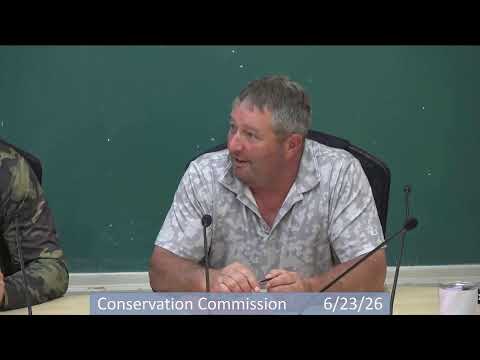
The Westport Conservation Commission on June 23 approved revised plans for dune/path restoration and access work within a state reservation, setting construction and restoration conditions after the applicant reduced the paved way to 16 feet and added a phased planting plan.
Tom (the project consultant) said the width reduction and a proposed restoration plan respond to commission concerns raised at an earlier meeting. "The road was reduced to 16 feet, which goes right ahead and minimizes all disturbance on that northern side of the dune," Tom said, and described a restoration approach that uses sand fencing, native plantings and staged work so disturbed areas are stabilized before crews move to the next section.
Staff outlined specific conditions for approval: a pre-construction meeting with the conservation agent and contractor, limits-of-work surveyed and flagged, on-site oversight by Mass DCR staff or an environmental firm during sand removal, installation of erosion controls and phased sequencing so the western section is restored and stabilized before eastern sections start. Staff recommended the approach as a reasonable compromise.
Commissioners pressed on timing and funding for restoration plantings; staff and the consultant said restoration planting is expected in fall 2026 and spring 2027 but noted some planting work depends on funding availability. The panel voted to approve the project with the recommended construction-method and restoration conditions. Staff also said equipment must remain off the dunes and that removed sand should remain on Mass DCR property or be transported in coordinated off-season operations.
The approval emphasizes phased work and monitoring to limit dune disturbance, and requires native New England plants and sand fencing specified in the submitted restoration memo.