Get Full Government Meeting Transcripts, Videos, & Alerts Forever!
Get email alerts on the Climate Action topic
No spam. Unsubscribe anytime.
Cambria board asks staff and ad hoc to refine climate action plan, seek cost estimates
Summary
Directors directed staff and the climate ad hoc to refine a draft climate action plan, clarify adaptation vs. mitigation work, create a public dashboard and obtain estimates or RFP cost proposals for a consultant study to identify infrastructure vulnerabilities and grant‑ready adaptation measures.
The Cambria Community Services District Board on Jan. 8 directed staff and the climate action ad hoc to refine a drafted climate action plan and return with cost estimates and potential consultant scopes for a focused climate adaptation component.
Director Thomas — a member of the ad hoc — emphasized the difference between a climate action (mitigation) plan and an adaptation plan and argued the district needs measurable, actionable steps rather than a long, encyclopedic report. Staff offered a concise draft (a short action outline) that would be expanded with ad hoc input. Director Gray and others urged including a focused adaptation analysis to identify vulnerabilities (for example, sea‑level intrusion risk at the San Simeon well field and wastewater plant exposure) and recommended soliciting consultant proposals to scope the work.
Why it matters: Staff said a targeted adaptation plan strengthens grant applications for infrastructure investments and helps prioritize upgrades to protect water and wastewater assets from climate impacts. Board members recommended balancing a practical, short plan (the “80/20” rule) with targeted consultant analysis on critical vulnerabilities.
Board direction and next steps: Directors asked staff to work with the climate ad hoc to (1) refine the draft action plan language and monitoring approach, (2) develop an RFP or obtain initial cost estimates for a consultant‑led adaptation analysis, and (3) establish a public climate dashboard with quarterly updates. Staff indicated it will return with refined text and estimates for board consideration and potential grant opportunities.
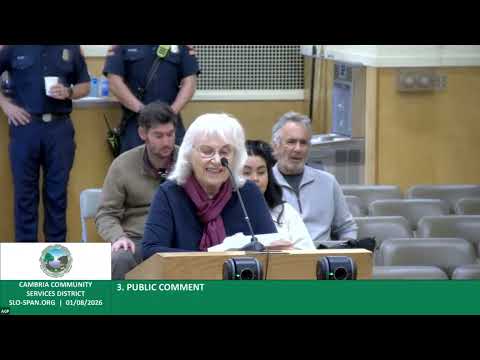
Public comments: Members of the public urged the district to treat climate work as a priority; commenters and directors suggested reallocating existing discretionary funds or seeking grants to pay for a consultant if needed.
The board did not adopt a final policy document at the meeting; it asked staff and the ad hoc to return with a refined plan and cost information.