Get Full Government Meeting Transcripts, Videos, & Alerts Forever!
Get email alerts on the Housing Affordable topic
No spam. Unsubscribe anytime.
Cambria board grants 36‑month extension for Cambria Pines affordable housing project
Summary
After a robust public and board discussion about financing, costs and water capacity, the Cambria Community Services District approved a 36‑month extension of the water intent‑to‑serve letter for People's Self Help Housing's 33‑unit Cambria Pines project, voting unanimously 5–0.
The Cambria Community Services District Board on Jan. 8 approved a three‑year extension of a water “intent to serve” letter for People's Self Help Housing’s Cambria Pines affordable housing project, allowing the nonprofit more time to secure tax credits and final financing.
The board voted 5–0 to grant a 36‑month extension after an extended presentation and public comment period. Juliana Gallardo Wilkie, the project lead for People’s Self Help, told the board the 33‑unit development on Schoolhouse Lane has county permits and a $7 million state grant but still needs federal low‑income housing tax credits (the 4% or 9% rounds) to close the financing needed to break ground.
Why it matters: Cambria Pines would add 33 deed‑restricted affordable units — a mix of one‑, two‑ and three‑bedroom apartments — adjacent to the existing Schoolhouse Lane complex. Staff said construction cannot start until the developer secures financing and the district issues a connection permit; the district also expects PSHH to pay capacity fees and install a local water main when the project is ready to move forward.
Board members asked detailed questions about the tax‑credit process, project cost and local prioritization. Director Scott pressed PSHH to explain the difference between 4% and 9% credits; PSHH said 4% credits are routinely used but 9% awards are more competitive and the recent $7 million HCD award strengthens their application. PSHH initially cited a $35 million estimate for total development costs and subsequently revised that figure to $28 million during the discussion.
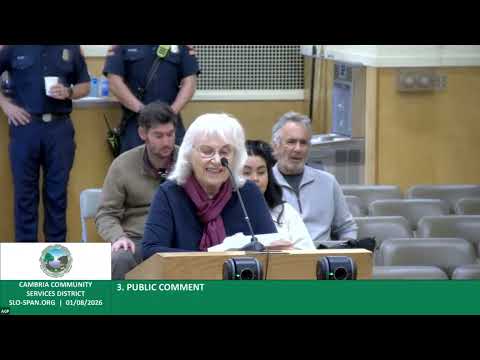
Several public commenters urged restraint on costs and proposed alternatives such as motel conversion; PSHH and board members said motel conversions face Coastal Act restrictions and that the project is already entitled with building permits in hand.
The motion: Vice President Dean moved to grant a 36‑month extension; President Farmer seconded. Roll call showed five ayes (Dean, Gray, Scott, Thomas, Farmer) and no dissent.
What’s next: Staff told the board it will issue a connection permit, collect capacity fees and start monthly billing only once PSHH breaks ground or demonstrates it has secured funding and is ready to proceed. PSHH said it will reapply for tax credits in the coming months and work with the county and district on final steps.