Get Full Government Meeting Transcripts, Videos, & Alerts Forever!
Get email alerts on the Code Of Conduct topic
No spam. Unsubscribe anytime.
Residents warn proposed code of conduct would chill speech and invite legal challenges
Summary
Multiple Clifton Park residents told the town board the proposed code of conduct (Resolution 13) is vague, risks violating the First Amendment and could allow the board majority to override the supervisor’s judgment; one official said he would refuse to eject speakers.
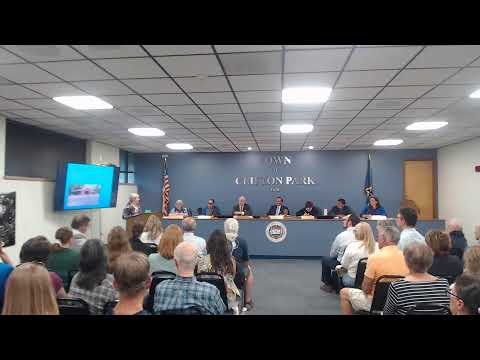
Residents at a Clifton Park town board meeting urged the board on Monday to withdraw a proposed code of conduct that would give the board tools to remove or sanction members of the public for disruptive behavior.
Several speakers said the proposal is written so vaguely that it would allow arbitrary enforcement and could have a chilling effect on public participation. "This resolution doesn't bring us together. It's bringing the town board farther apart," said a resident during public comment, arguing the rules could lead to residents being escorted out of meetings.
Pam Konaszewski, who identified herself during the public-comment period, said the proposal could prompt litigation under 42 U.S.C. § 1983 and cited recent federal-court rulings she said limit local civility rules. "Courts have ruled that civility cannot be required in public comment sessions," she said, adding that vague terms such as 'impertinent' or 'unruly' are legally fragile and that officials may not silence speakers merely because others find the remarks offensive.
Other speakers gave concrete examples of why they oppose the language. Jacob Kearns said subjective wording would leave residents unsure what expression is permitted and likened crowd reactions at meetings to applause or boos at a sporting event. Pamela Barnes, a longtime real-estate professional who said she also serves on a professional ethics board, told the board members they have a fiduciary duty to residents and warned that a blanket prohibition on free expression could violate the First Amendment. "The board can enforce rules on the time, the place, and the manner, but they cannot shut down speakers simply because they disagree with a viewpoint," she said.
Speakers also questioned how the town would enforce the rules. One commenter asked why the town's attorneys were not available for a scheduled court conference and noted the town employs three attorneys at an approximate combined annual cost of $300,000. Several public speakers raised concerns about social-media posts by town court employees that they said could undermine perceptions of impartiality.
In response, a town official who spoke from the dais said the proposed legislation appears intended to create a formal mechanism to eject disruptive people. The official added that in 27 years he has not removed anyone from a meeting and said he "will not be directed" by the board majority to eject attendees, asserting he would not comply with a directive to do so.
No formal vote on the resolution was recorded during the public-comment period covered in the transcript. The discussion highlights a divide between speakers who said the measure is necessary to maintain order and residents who said the proposal is overbroad and legally vulnerable. The town board may revisit the measure during upcoming meetings.