Get Full Government Meeting Transcripts, Videos, & Alerts Forever!
Get email alerts on the Bpac Governance Minutes topic
No spam. Unsubscribe anytime.
BPAC members clash over minutes and agenda process; deputy city attorney clarifies role and procedure
Summary
Commissioners debated the content and usefulness of meeting minutes, voted twice after a 3-3 tie and ultimately approved previously contested minutes; the deputy city attorney explained that city policy makes minutes action-item focused and that video archives carry fuller meeting detail.
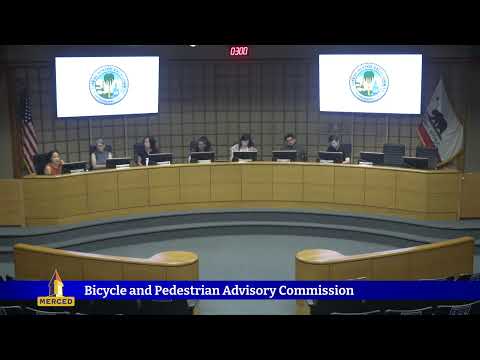
Commissioners on the Bicycle and Pedestrian Advisory Commission spent substantial time on June 23 debating whether meeting minutes should record more of the discussion and how the commission's agenda items are prioritized.
"Minutes per our city clerk and city policies are action items only," Deputy City Attorney Rhonda Lucas told the commission, explaining that discussions are not transcribed into minutes under current city practice and that video is the record for full meeting content.
The debate began when Commissioner Kaiser Grant urged fuller documentation of past meetings, saying the posted minutes "read like an agenda" and left out substantive discussion. Several commissioners said canceled meetings in 2025 left gaps in the record and expressed frustration that some capital projects arrive for review too late in the design process.
Commissioner Martinez moved to approve minutes for three prior meeting dates but the roll call produced a 3-3 tie and the motion failed. After Lucas explained the procedural requirements for a motion to be reconsidered, the commission later made a motion to reconsider and, on a second vote, approved the minutes.
Commissioners also discussed the 'items of interest' list staff compiled as a record of topics members had requested in the past. Staff said the list is an accounting of commissioner interests and that direction to staff typically comes from the city council; they also said items can be agendized as informational items or prepared as resolutions for council consideration.
Several commissioners recommended a tracking tool to document requests and follow-ups. Gina Cooley of Strong Towns Merced had earlier urged adoption of a tracking template as a transparency best practice; commissioners and staff agreed the commission could document requests for future agendas and that staff would work to make the items more visible.
Several commissioners also raised the possibility of asking the city council to change BPAC's meeting schedule and frequency (including a proposal to meet in the evening and more often). The deputy city attorney explained that changing the commission's meeting time would require an amendment to the relevant municipal ordinance (Merced Municipal Code 2.52), a process that requires agendizing at council and, if adopted, multiple readings.
The commission concluded the procedural discussion by asking staff to help prioritize the 'items of interest' and to bring clearer onboarding materials for new commissioners so future meetings can use agenda time more efficiently.