Get Full Government Meeting Transcripts, Videos, & Alerts Forever!
Get email alerts on the Land License topic
No spam. Unsubscribe anytime.
Select Board approves 3‑year National Grid staging license for town land with resident warnings about aquifer and wetlands
Summary
Groveland approved a three‑year temporary license allowing National Grid to stage materials at 150 Center Street for a transmission project, starting at $150,000 per year. Residents urged caution, citing wellhead protection (Zone 2), wetland buffers, endangered species habitat and compaction risks; the board recorded a 3‑in‑favor, 1‑opposed, 1‑absent vote and required permitting and inspections.
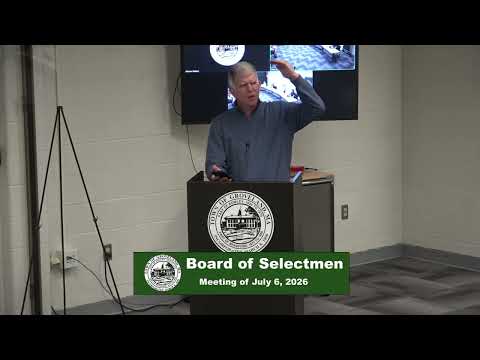
The Groveland Select Board voted July 6 to approve a three‑year temporary license that allows National Grid to use a portion of town property at 150 Center Street as a staging area for transmission‑line replacement work, after residents and board members pressed staff for environmental safeguards.
Town administrator Rebecca presented the draft license and said the company proposed to pay $150,000 in the first year with a 5% annual increase, producing roughly $475,000 across three years if fully executed. The agreement is written as a temporary licensing arrangement (not a sale or long‑term lease), requires National Grid to fence and secure the staging area, obtain any permits triggered by conservation or planning thresholds, and return the property to its prior condition on exit. The town also retains a 60‑day removal clause to end the license if necessary.
Several residents spoke against immediate approval without additional protections. “This is within Zone 2 of our wellhead protection area of Well 1,” Jan Dempsey said, asking the board to consider the risk posed by trucks, diesel and petroleum products that could leak onto aquifer recharge areas. Mike Dempsey raised wetland and priority‑habitat concerns and urged that Natural Heritage, the conservation commission and other regulators be notified and involved to ensure no incidental impacts.
Rebecca and staff answered that no permanent structures or foundations would be placed, that the staging area could be adjusted to stay clear of sensitive areas and that any activity requiring permits would proceed through the normal conservation or planning review. Staff said site staging for municipal roadway projects and prior construction activities had used similar areas and that the draft license expressly requires compliance with town bylaws and permitting.
Board members insisted on active monitoring. The Select Board recorded a vote of 3 in favor, 1 opposed, 1 absent, and staff committed to provide regular site photos and biweekly reports while the staging area is active. The board also emphasized that conservation and building inspectors could access the property to verify compliance and that the town could invoke the 60‑day removal clause if violations occur.
Ending: The Select Board approved the license subject to the agreement's permitting and monitoring requirements; residents asked staff to ensure early conservation commission and Natural Heritage reviews and to keep the community informed of any operations near wellhead protection zones.