Get Full Government Meeting Transcripts, Videos, & Alerts Forever!
Get email alerts on the Energy topic
No spam. Unsubscribe anytime.
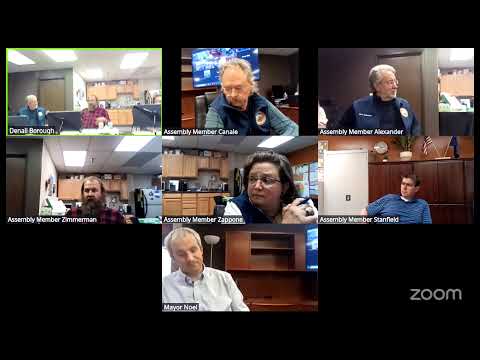
Denali Borough backs further study of community solar, softens pledge on matching funds
Summary
After a lengthy discussion of financing, tax-credit timing and subscriber models, the Assembly amended a resolution to express support for pursuing a community solar project and authorized feasibility/interconnection studies rather than committing matching funds immediately.
The Denali Borough Assembly on July 28 amended and approved a resolution expressing support for pursuing a community solar project and funding strategy, but removed firm language committing matching funds. The amended resolution directs staff to continue technical and financial feasibility work, including an interconnection study with Golden Valley Electric Association.
Members debated the project’s merits and risks: proponents highlighted potential tax credits (a possible 40% reduction in cost if the project meets the near-term deadlines) and subscription savings (modeling showed a potential ~30% annual bill savings for subscribers), while skeptics warned the timetable for tax credits and technical interconnection posed significant risks. Assembly members and staff described a three-tier subscription model (residents, small businesses, community facilities) and the possibility of financing the project through the Alaska Energy Authority’s Power Project Loan Fund, which can be flexible on terms and requires no minimum cash down.
The Assembly amended the resolution to say it "supports undertaking the community solar project and associated feasibility work" and removed explicit language promising matching funds. Members asked the administration to continue the interconnection study (est. 1–6 months) and to return with clearer tariff and tariff-impact analysis from Golden Valley. The change preserves staff flexibility to seek grants, apply for available tax-credit windows, and structure a subscription model that prioritizes residents and small nonprofits.
What happens next: borough staff will continue the interconnection study and work on financing models, return with more concrete tariff and subscription proposals, and convene a focused working group if the Assembly directs one.