Get Full Government Meeting Transcripts, Videos, & Alerts Forever!
Get email alerts on the Site Cleanup topic
No spam. Unsubscribe anytime.
Consultant warns asbestos, lead and PCBs at Valley Screw mill; town presses state and federal agencies for demolition funding
Summary
A consultant’s pre‑demolition survey found multiple asbestos materials, lead‑containing paint and PCBs at the Valley Screw (Valley Scribe) mill; town officials and residents pressed for basement testing and argued the site’s Superfund designation is blocking Brownfields funds for demolition. The Select Board agreed to continue pressing MassDEP, the EPA and state delegation.
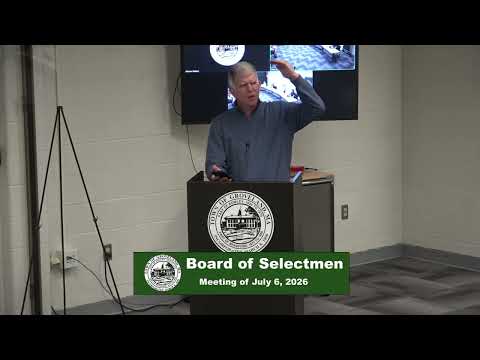
The Groveland Select Board on July 6 heard a detailed hazardous‑materials assessment of the Valley Screw (also called Valley Scribe) building at 64 Washington Street and listened as the consultant and residents pushed for faster action to protect public safety and groundwater.
Rick Vandenberg, a vice president at Credit Erie Associates, told the board his team found sizable areas of asbestos‑containing floor tiles (brown and gray 12‑inch tiles), textured ceiling coatings and some roof materials that tested positive for asbestos. His firm also identified lead‑containing paint throughout the structure and traces of polychlorinated biphenyls (PCBs) on metal elements; the PCBs measured under 50 parts per million, a threshold Vandenberg said matters for disposal costs.
The consultant cautioned that structural instability limited sampling inside the mill: collapsed floors, compromised roof areas and other unsafe conditions prevented a full basement inspection. “We did find a number of asbestos‑containing building materials,” Vandenberg said, and added that some materials will likely require non‑traditional abatement methods — in practice demolition or wet‑demolition approaches — because portions of the building are unsafe to access for traditional abatement.
Residents, including longtime neighbors worried about past contamination, pressed the board for targeted basement testing and immediate action to prevent any contaminant migration to local wells. “We need to know how to get access to that part of the building where the worst things could be happening,” said resident Kathy Castronellis, who urged testing of the basement and concrete to determine whether the site is contributing to groundwater risks. Vandenberg said the best immediate path is to make the building structurally safe — and that demolition conducted inside an environmental program or under a state non‑traditional work practice is often the practical route for buildings in this condition.
Funding is the central obstacle. Town staff and the consultant said the parcel currently participates in the federal Superfund program, which can block use of Brownfields funds for demolition; that status has limited the town’s ability to apply for certain federal cleanup grants. The town secured federal support to pay for the consultant’s additional testing through a senator’s office, but officials said they are pursuing two parallel tracks: (1) urge EPA and MassDEP to prioritize securing and, where warranted, demolishing the building inside federal procedures, or (2) press for the building to be delisted from the Superfund parcel so Brownfields and other funds could be applied to demolition and further characterization.
Town administrator Rebecca said staff had submitted formal correspondence to MassDEP and EPA disputing earlier limited test results and asking for clearer direction; she said the next step is coordinated advocacy with state and federal delegation offices to secure meetings and push for a path to either remediation or removal. Vandenberg and residents urged persistent advocacy. “Every successful Brownfields project I’ve seen has a champion,” Vandenberg said, praising local volunteers and staff who have continued to raise the issue.
The board did not take formal policy action at this meeting but directed staff to continue outreach to MassDEP, EPA and the town’s state and federal delegation, and to keep the community informed about any new testing opportunities or funding pathways.
Ending: Town staff will continue coordinating with the consultant, regional planning partners and state and federal offices to pursue either programmatic action by the EPA or delisting that could allow Brownfields funding for demolition; residents urged frequent public updates and prioritized sampling where it can be done safely.