Get Full Government Meeting Transcripts, Videos, & Alerts Forever!
Get email alerts on the Roads topic
No spam. Unsubscribe anytime.
Denali Borough delays proposed road-construction standards after residents warn of high costs
Summary
After lengthy public comment and an extended Assembly debate, the Denali Borough Assembly voted to postpone Ordinance 26-02 (road-construction standards) indefinitely, citing concerns that the proposed minimums would be unaffordable for many property owners and would need reworking with the planning commission.
The Denali Borough Assembly indefinitely postponed proposed Ordinance 26-02 on July 28 after residents and several members warned the draft standards would impose unaffordable engineering and construction costs on property owners.
The ordinance, which would have set boroughwide design and construction standards for new roads and subdivisions, drew multiple public commenters during the hearing who said the cost of engineered standards would price out local residents. "I believe that it would be a financial hardship for citizens of Denali Borough to improve their road or build a road to access their property," said Dorothy during public comment. Don DeBlau, who described his neighborhood’s volunteer road maintenance, asked rhetorically, "How would anybody ever be able to afford to do it?" and urged the Assembly not to impose large engineered standards on rural roads.
Supporters of a standard said the borough and residents benefit from a clear reference for minimum widths, crowns and culverts—primarily for emergency access and to guide grant-funded projects and inspections. Mayor Noel said the planning commission worked on a draft for months and that a reference guide could help land planners and applicants know what "success looks like," but acknowledged local conditions and gravel availability vary across the borough.
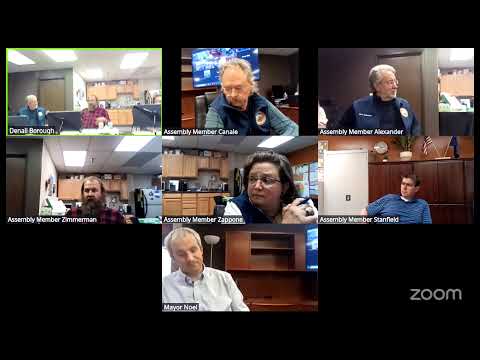
After an extended discussion about feasibility, equity and grant models, Assembly member Jeremy Stanfield moved to postpone the ordinance indefinitely and to convene a joint work session with the planning commission to produce a more pragmatic, potentially tiered minimum standard. The motion passed. The Assembly agreed to pursue a work session to develop narrowed, affordable minimums (for example: defined roadway width, crown and culvert requirements) and to explore using the application process and grants as implementation tools rather than immediate code requirements.
What happens next: the ordinance as drafted is off the table; the Assembly directed staff to coordinate a planning commission–assembly work session to refine minimums and to bring back options that balance safety, affordability and code clarity.