Get Full Government Meeting Transcripts, Videos, & Alerts Forever!
Get email alerts on the Strategic Planning topic
No spam. Unsubscribe anytime.
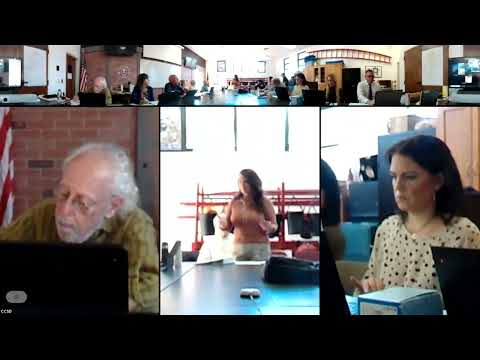
Cambria board workshop centers on water, WRF permitting and whether parks can be funded
Summary
At a daylong strategic‑planning workshop, Cambria staff urged prioritizing core services — water, wastewater and fire — and outlined progress on the wastewater reclamation facility (WRF). Directors and residents debated funding for discretionary parks projects, including a proposed community park and skate park.
The Cambria Community Services District held a full‑day strategic‑planning workshop March 2 to refine five‑year goals and decide which projects the district can afford to pursue.
General Manager Matthew McElhinney told the board the district is “fully groundwater dependent” with a single evacuation corridor and a tightly constrained general fund, arguing that the strategic plan should prioritize “water reliability, wastewater integrity, fire suppression capability, and backup power and redundancies.” McElhinney also briefed directors on recent progress toward permitting the wastewater reclamation facility (WRF), noting the district now has a coastal development permit from the county planning commission and is expecting further review by higher agencies.
Public commenters praised the permit success but pressed the board for clearer target dates. Dennis Ducek, a resident, urged the plan to replace language that calls for “research” with explicit completion dates and action steps to secure long‑term water supply and remove invasive vegetation that exacerbates flood and fire risk.
The meeting exposed tensions over discretionary projects. Several directors and staff warned that general‑fund projects such as a community park and the skate park risk diverting utilities staff time and money away from core services. McElhinney said the utilities team has spent significant time on general‑fund projects and recommended requiring defined scopes, life‑cycle costs and funding before approving discretionary work.
Board members split on approach. Some praised the staff’s focus and the WRF permitting progress; others expressed community frustration over past investments and the perceived slow payoff. The board agreed to work supporting actions into the strategic objectives and to form an ad hoc process to study funding options for parks and recreation projects.
The workshop concluded with the board directing staff to fold public comments into measurable objectives and to return with clearer funding plans and timelines; a procedural motion about adjournment was made and seconded but no formal vote appears in the transcript.
The district plans follow‑up work on prioritization, and staff indicated the next step will be to convert the workshop objectives into a version of the strategic plan that includes specific supporting actions and target dates.