Get Full Government Meeting Transcripts, Videos, & Alerts Forever!
Get email alerts on the Unrwa Transparency topic
No spam. Unsubscribe anytime.
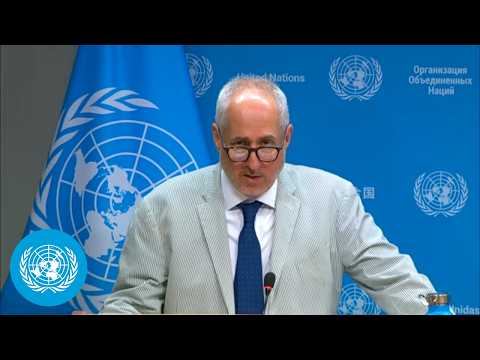
U.N. defends UNRWA and declines to release communications after accusation over special representative
Summary
At a U.N. briefing, the U.N. spokesperson urged donors to support UNRWA, said the agency has been transparent under Christian Saunders, and declined to release internal communications after a reporter cited an accusation that a special representative had been influenced by the secretary-general.
Islam, a reporter, asked whether reports that coordinated pro-Israel organizations were pressuring Germany to cut aid to the United Nations Relief and Works Agency (UNRWA) after the United States reduced funding amounted to a worry for the secretary-general.
Steph, a United Nations briefing moderator, responded that the U.N. "passionately" needs member-state support for UNRWA and praised UNRWA leadership under Christian Saunders for being "extremely transparent" and ready to answer donors' questions. She said the U.N. will continue to interact with donors in a transparent way and urged support for the agency's humanitarian work.
Islam followed by asking whether such donor pressures contradicted a Security Council resolution that the reporter described as mandating U.N. humanitarian deliveries to Gaza. Steph reiterated that the Security Council resolution mandates the U.N. to deliver humanitarian goods and said "everyone should be supporting our work in that regard."
Later in the session, reporter Benny raised an allegation, citing the Israeli ambassador to the Security Council, that Pramila Patten had been influenced by the secretary-general and asked whether the U.N. would release all communications with the secretary-general. Steph declined to release the requested documentation. "No. We won't," she said, adding that "the report is not Pramila Patten's report. The report is the secretary-general's report. It's his name that's on it. He stands by it."
Why it matters: the questions reflect heightened scrutiny over donor decisions and calls for transparency about the authorship and backing of U.N. reporting. The briefing framed the issue as a matter for donor review and internal U.N. accountability, while refusing to disclose internal communications.
No formal documents were released during the briefing and reporters did not present documentary evidence in the room. The moderator reiterated support for the special representative's role in preparing the report and declined to provide further documentation.