Get Full Government Meeting Transcripts, Videos, & Alerts Forever!
Get email alerts on the Humanitarian Funding topic
No spam. Unsubscribe anytime.
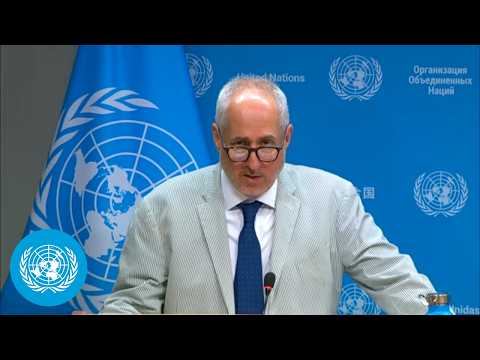
U.N. briefing: appeals for $640 million as crises in Lebanon, Sudan, Gaza and elsewhere strain aid operations
Summary
A U.N. briefing urged donors to close funding gaps for multiple crises, saying a revised flash appeal seeks $640 million to help 1.4 million people through August 2026 and that the 2026 humanitarian response plan is under one-third funded.
Steph, a United Nations briefing moderator, urged international donors to increase funding as multiple humanitarian crises strain relief operations across the Middle East and Africa.
The most immediate request is a revised flash appeal seeking $640,000,000 (U.S.) to support about 1,400,000 people through August 2026, Steph said, adding that the appeal is only roughly 42.2% funded to date. She also warned that the broader 2026 humanitarian response plan has received about $930,000,000 of nearly $2,900,000,000 needed, leaving the plan less than one-third funded.
Why it matters: funding shortfalls limit deliveries of food, water and medical supplies and complicate plans to scale up responses before seasonal needs peak. "Funding, as you can imagine, remains a major concern," Steph said.
On Lebanon, Steph reported that U.N. peacekeepers in the south recorded more than 41 air violations in one day, observed two reconnaissance quadcopters and one armed quadcopter operating near El Bayada, and saw strikes roughly 700 meters from a U.N. position. She said peacekeepers faced movement restrictions and temporary stops by Israeli forces. More than 33,000 people remain in 325 collective shelters across Lebanon, and partners facilitated over 370 humanitarian movements delivering more than 770 trucks to hard-to-reach areas.
On the occupied Palestinian territory, Steph described a virtual diplomatic visit to a displacement site in Al Mawasi, Khan Yunis, where diplomats observed water being distributed by truck and hundreds of tents along the shoreline. She said residents told diplomats they need sustainable water services and cash-for-work opportunities to feed families.
In Sudan, the briefing highlighted drone strikes and disease outbreaks in Kordofan. Steph said a drone attack targeted a water truck in Hamrat Al Sheik and that, in El Obeid, water supply currently meets only about 20% of the city's needs. She said OCHA has allocated more than $4,000,000 from the Sudan Humanitarian Fund to partners providing food, health care, water and sanitation.
On Ebola, Steph said the inter-agency standing committee activated a system-wide scale-up in the Democratic Republic of the Congo; the U.N. deployed a senior Ebola coordinator and the emergency relief coordinator, Tom Fletcher, released $60,000,000 from the Central Emergency Response Fund to accelerate the response and support preparedness in neighboring countries. Steph noted that Uganda has reported no new Ebola cases in the last 17 days and credited national authorities, WHO and U.N. country teams for the gains.
Steph also detailed humanitarian activity in Venezuela, where Tom Fletcher has called for an additional $298,000,000 to address critical needs over six months, and in Haiti, where armed clashes in the West Department displaced more than 3,000 people across several communes.
The briefing closed with a reminder that timely, flexible funding and unimpeded humanitarian access are essential to sustain returns, protect civilians and support recovery efforts.