Get Full Government Meeting Transcripts, Videos, & Alerts Forever!
Get email alerts on the Oath And Anti Discrimination Ordinance topic
No spam. Unsubscribe anytime.
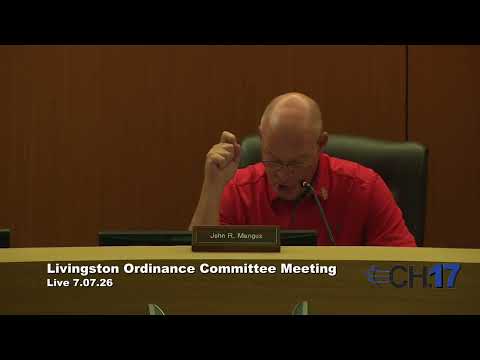
Ordinance committee approves anti-discrimination oath for parish appointees, requires current members to sign by Dec. 31
Summary
The Livingston Parish Ordinance Committee voted July 7 to send a proposed ordinance to the full council that would require all parish-appointed board and commission members to execute an oath affirming a "right to individual dignity" and compliance with federal, state and local anti-discrimination laws; the committee added a deadline for current appointees and asked that retaliation be listed as a violation.
The Livingston Parish Ordinance Committee on July 7 approved sending a proposed ordinance to the full parish council that would require all board and commission appointees to take an oath promising to "accord all persons with whom I interact on behalf of the parish the right to individual dignity" and to follow federal, state and local anti-discrimination laws.
The ordinance as read into the record establishes a "right to individual dignity" policy, directs legal counsel to prepare a summary of constitutional and statutory obligations for distribution to appointees, requires recipients to certify they have read the summary before acting or receiving payment, and authorizes appointing authorities to pursue disciplinary action, including termination, for violations. The committee recommended adding explicit language that retaliation against complainants is a violation.
Counsel who presented the draft said the measure was prompted by "issues we—e had for a long time" and citizen concern and emphasized the ordinance is meant to make clear the parish expects appointees to follow existing law. "We want to make the public understand that this parish is serious about this," the presenting attorney said, adding that the proposal "raises the bar a little bit" for those who serve.
Committee members debated the ordinance—s scope. Several members and the presenting counsel agreed the committee can require appointed board and commission members to take the oath because the council appoints them, but applying the requirement directly to parish administration employees could implicate civil service rules and raise legal risk. The draft language originally covers "every person employed by Livingston Parish" and "every person holding an appointed office or position," which some members said is broader than the committee—s original assignment.
On retroactivity, members were advised not to attempt discipline for past conduct: one attorney warned retroactive punishment could invite litigation, though the committee agreed it could require current appointees to take the oath by a deadline. The committee coalesced around an amendment requiring all current board and commission members appointed by the council to sign and take the oath by Dec. 31, 2026.
The ordinance also creates an investigation process: the parish president would designate an attorney to receive and investigate complaints, and that attorney would report findings to the parish president, the parish council and the appointing authority. The presenter said investigations would be treated as personnel matters and that, where a violation is "open and flagrant," an appointing authority may take immediate action pending investigation where allowed by law.
During public comment, resident Jackie Reed asked whether disciplinary actions for racial slurs should come to the council before a board takes final action; committee members and counsel replied the ordinance is intended to create a standardized investigative and reporting path and noted civil service protections can limit how discipline is applied. Resident Danielle Robinson urged clearer language describing what constitutes a violation, mandatory training and public reporting of investigation outcomes where legally permissible; the committee agreed to accept suggested verbiage and to consider adding training and reporting mechanisms in follow-up policy.
A motion to approve the ordinance as amended — adding the Dec. 31, 2026 deadline for current appointees and including retaliation as a violation — was moved, seconded and approved by the ordinance committee. The committee voted to forward the ordinance to the full parish council for introduction on July 23.
Next steps: the ordinance will be presented to the full Livingston Parish Council on July 23 for consideration, where members can further amend the text, decide whether to expand the scope to employees, and confirm who will designate the investigating attorney if the law is adopted.