Get Full Government Meeting Transcripts, Videos, & Alerts Forever!
Get email alerts on the Rent Stabilization topic
No spam. Unsubscribe anytime.
Takoma Park council approves narrow scope for rent-stabilization review after heated debate
Summary
After hours of public comment urging protections for tenants, the council voted to approve a resolution directing staff and consultant RSG to research specified rent-stabilization policy options; amendments to explicitly require a racial-equity analysis and to add preservation of affordable-unit inventory failed.
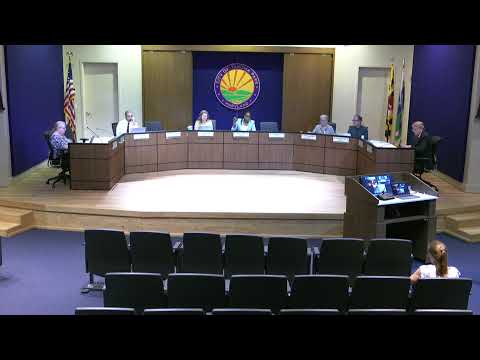
The Takoma Park City Council on Monday approved a resolution directing consultant RSG and city staff to research a targeted set of rent-stabilization policy options, after a lengthy public comment period and debate among council members.
Residents filled the public-comment period with pleas to guard existing tenant protections. "Keep the current CPI formula," said Saul Schneiderman of Ward 3, warning that adding floors or ceilings to the city’s consumer-price-index adjustment could raise rents for residents he described as disproportionately nonwhite and low-income. Colleen Cortes (Ward 1) told the council the draft review "still suggests areas for potential changes that could seriously weaken rent stabilization," and urged that every policy option be evaluated through the city’s racial-equity framework.
The council’s discussion focused on which policy topics to send back to RSG. Mayor Searcy framed the resolution as a directive to "stay true" to the consultant’s language and scope from its June materials, listing topics for deeper analysis including capital-improvement pathways, utility transfers, exemptions (including unit-based and new-construction exemptions), and deed-restricted units. Director of Housing and Community Development Director McNally explained how deed-restriction affordability terms and federal programs such as low-income housing tax credits create regulatory periods that typically run between 15 and 55 years and can be recapitalized; he said that when a regulatory agreement lapses under current city law, those units would then become subject to the Takoma Park rent-stabilization ordinance.
Council member Schlegel pushed to add explicit language to the resolution to "maintain or increase the stock of affordable rental housing," saying such language would guard against policies that could erode affordable-unit inventory over time. That motion failed on a roll call. A separate proposal to insert the word "petition" into "capital improvement pathways"—to explicitly call out fair-return petition processes—also failed. Council member Schlegel and others proposed a further resolved clause directing staff to ensure that the city’s racial-equity lens be applied to policy options; that motion likewise failed after roll-call votes.
Supporters of the resolution said the council’s intent was to narrow RSG’s work to a manageable set of policy options to avoid scope creep and budget overruns. "We were told we could go six [policy options] as the max," Mayor Searcy said. Council members who voted for the resolution emphasized that targeted follow-ups and additional staff work could address broader concerns later.
Public commenters and several council members warned that deeper racial-equity and displacement analyses would be important once RSG presents specific policy recommendations. McNally cautioned that the city’s best data sources, such as the American Community Survey, are useful but limited at very fine municipal boundaries and that detailed impact modeling can be costly and time-consuming. "There is some data out there, but it is not necessarily going to be a perfect crystal ball," he said.
The council voted to approve the resolution as presented; the motion passed by roll call. The resolution directs RSG to focus its next phase on the council-identified topics and directs city staff to handle administrative items (program administration, outreach, tenant/landlord education) separately. The final report and any policy recommendations from RSG will return to the council for further consideration and potential action.
What’s next: RSG will continue its analysis on the council’s prioritized items and staff will carry out administrative improvements requested by council. Council members and residents who urged additional racial-equity and displacement analysis may seek targeted follow-up work at the point when specific policy options are proposed.