Get Full Government Meeting Transcripts, Videos, & Alerts Forever!
Get email alerts on the Mosquito Surveillance topic
No spam. Unsubscribe anytime.
Cabarrus Health Alliance demonstrates mosquito sampling, larvicide and trapping at McGee Park
Summary
Cabarrus Health Alliance staff demonstrated field surveillance at McGee Park, showing how they dip standing water for larvae, apply a bacterial larvicide called VTI when larvae are found, and use a light trap plus dry ice (CO2) to collect adult mosquitoes for later identification.
Brianna, an environmental health specialist at Cabarrus Health Alliance, demonstrated field surveillance techniques for mosquitoes at McGee Park, showing how staff check standing water for larvae and set traps to collect adults.
"What we'll do is take the little cup here, dip it into the standing water, and bring it up so we can see if there's any larvae in the water," Brianna said, describing the hand-sampling method staff use to locate breeding sites. She said that, "If we find any larvae, we can treat with our VTI," referring to a bacterial larvicide used by the program.
Sarah Wigran, an environmental health intern for Cabarrus Health Alliance for the summer, said the team planned to "go out to McGee Park and see what kind of mosquitoes that they have at that location, set up some [trap]," as part of routine surveillance to document local mosquito species and breeding locations.
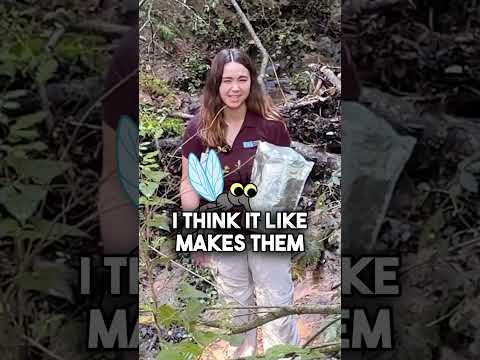
Brianna explained the larvicide method in more detail: "It's a bacteria that the larvae eat," and added a colloquial aside, "I think it, like, makes them explode or something." She then demonstrated an adult-collection setup, saying, "We have a light trap here. It's gonna bring the mosquitoes down here into this net. We also have this cooler with, dry ice.... So there's 2 different types of attractants with the CO2 here and with the light." The dry ice produces carbon dioxide to mimic human breath, which attracts adult mosquitoes into the trap for collection.
The demonstration combined visual inspection of water for larvae, on-site use of VTI larvicide when larvae are present, and deployment of light-and-CO2 traps to gather adults for later species identification and program records. Staff said they would collect and review the catches to inform any follow-up control or monitoring steps.