Get Full Government Meeting Transcripts, Videos, & Alerts Forever!
Get email alerts on the School Speed Detection topic
No spam. Unsubscribe anytime.
Temple Terrace council advances school‑zone speed‑camera ordinance on first reading after debate over data and vendors
Summary
On July 7 the Temple Terrace City Council approved on first reading an ordinance to permit automated speed‑detection systems in five school zones, setting a phased rollout and citing state law; the vote was 4‑1 after extended debate over data retention, vendor selection and enforcement scope.
The Temple Terrace City Council voted 4‑1 on July 7 to advance an ordinance that would allow automated speed‑detection systems to issue notices for drivers exceeding posted school‑zone limits in designated time windows.
The ordinance, modeled on neighboring jurisdictions and authorized by Florida Statute 316.1895, targets five school zones identified in a February traffic study: Greco Middle School, Woodmont Charter School, Temple Terrace Elementary School, Lewis Elementary School and River Hills Elementary Magnet School. The council directed staff to schedule a second reading and public hearing on Aug. 4.
Deputy City Attorney Nicole Donnell told the council the statute authorizes local governments to implement speed‑detection systems and to designate a local hearing officer to manage appeals. Captain Malave of the Temple Terrace Police Department outlined a phased six‑month rollout beginning with Greco Middle and Lewis Elementary, validation of potential violations by law‑enforcement personnel before mailing notices to registered owners, and operation only during active school‑zone flashing‑light periods. He said non‑triggered recordings made during active hours would be retained 30 days, while images tied to violations would be retained as evidentiary records and destroyed 90 days after final disposition.
Members of the public and councilors pressed staff on where cameras would be placed, how long images would be stored, whether vendors might use the footage for other purposes, and whether the city would require competitive procurement. Katie Nash, representing Genoptic, urged the council to permit local vendors to compete, emphasize data integrity, and require community‑facing reporting and third‑party audits.
Council members repeatedly asked that contract language explicitly prohibit remote surveillance or sale of data. Deputy City Attorney Donnell cited Fla. Stat. 316.1896(15)(a), saying the statute expressly bars using speed‑detection systems for remote surveillance and staff committed to include protective language in the contract.
Several councilors pressed staff to obtain a clear scope-of‑services document and to solicit offers beyond the referenced piggyback agreement so the city could evaluate multiple vendors. Captain Malave said the piggyback option being considered could avoid some costs, such as certified mail, and that many vendors operate on a revenue‑sharing model with the municipality.
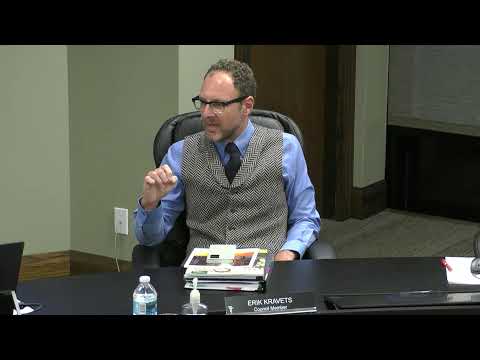
Council member Fernandez said she opposed remote automated enforcement and prefers live enforcement; she voted against first reading. Council member Kravitz urged robust vendor competition and a clearly defined scope of deliverables. The council asked staff to return with contract language addressing data retention, auditing, hearing‑officer procedures and measurable performance metrics to demonstrate the program’s effect on speeds.
The ordinance will return for second reading on Aug. 4, at which time staff also will present proposed contract terms and the city’s plan for a local hearing officer.