Get Full Government Meeting Transcripts, Videos, & Alerts Forever!
Get email alerts on the Historic Preservation topic
No spam. Unsubscribe anytime.
Mayor Robichaud and Historic Assets staff highlight Roswell's river-powered past and preservation work
Summary
In a podcast interview Mayor Mary Robichaud spoke with Dina Bush of the city's Historic Assets division about archaeological finds, mill ruins along Vickery Creek, three city house museums and upcoming programs tied to Roswell's history, including an October event on Theodore Roosevelt.
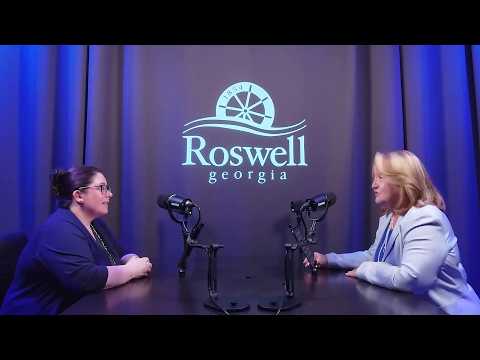
Mayor Mary Robichaud interviewed Dina Bush of the City of Roswell's Historic Assets division about the city's history and preservation work in a recorded episode of Inside Roswell. The conversation traced Roswell's origins to river-powered mills, described programs that interpret local sites, and highlighted community-centered preservation efforts.
Bush said the division operates three house museums—Barrington Hall, Bullock Hall and Smith Plantation—and advocates for other historic sites, including cemeteries and mill ruins. "Our team helps stewards Roswell's historic sites and resources, including the daily operations of the 3 historic house museums," she said, describing the division's role in both day-to-day museum operations and public outreach.
The interview emphasized deep-time occupation of the area. "We have archaeological investigations that date human activity here in this area back 8,000, 10,000 years ago," Bush said, urging listeners to consider Indigenous histories as part of the city's long record. Robichaud added that Roswell's recorded civic history dates to roughly the city's incorporation about 173 years ago (as stated in the episode).
Both speakers credited the Chattahoochee River and tributary streams such as Vickery Creek with shaping Roswell's industrial development. Bush described how water power supported textile mills that in turn built the town: "It's that water power ... to power a mill, to create a textile mill, to create a business, which developed the town," she said. She directed listeners to Vickery Creek Park and the mill ruins there as places where that industrial past is still visible.
Bush outlined preservation work beyond tours and events: conservation and repair projects, artifact management, and collections care. She noted that preservation requires technical know-how, including knowledge of pests that damage paper and careful artifact conservation, and described the division's role in education and community engagement.
The program also traced personal and national connections in local history. Bush said Bullock Hall was the childhood home of Mittie Bullock, who married into the Roosevelt family in December 1853, and that President Theodore Roosevelt visited Roswell in 1905 to speak in Town Square and visit local historic homes. Bush said the Historic Assets division is planning a program about Roosevelt in October as part of Roswell's contributions to the city's "Tapestries of Generations" events tied to America's 250th anniversary.
Bush emphasized inclusive programming that examines multiple themes, including industry and labor, war and its impacts, segregation and the Black experience, and women's history. She recommended that residents use state and local historical markers, walk river corridors and sites such as Canton Street, Town Square and Groveway Community to connect places with stories.
The episode closed with a lightning-round segment in which Bush recommended the cemeteries as favorite historic sites and suggested short driving or walking tours that start at the river and move north past Barrington Hall, Town Square and Smith Plantation. "You do not have to travel outside of Roswell to understand American history," Bush said.
What happens next: the Historic Assets division will continue scheduled programming; Bush mentioned the October Roosevelt program. No formal city action or vote was reported in the episode.