Get Full Government Meeting Transcripts, Videos, & Alerts Forever!
Get email alerts on the Traffic Enforcement topic
No spam. Unsubscribe anytime.
Residents question dense placement of stop‑sign cameras; town schedules vendor presentation
Summary
Residents at the April 15 Forest Heights council meeting urged transparency about why three stop‑sign cameras were sited on a single block; Mayor Lillie said two multi‑intersection studies informed placements and invited the camera vendor to present data at a May meeting.
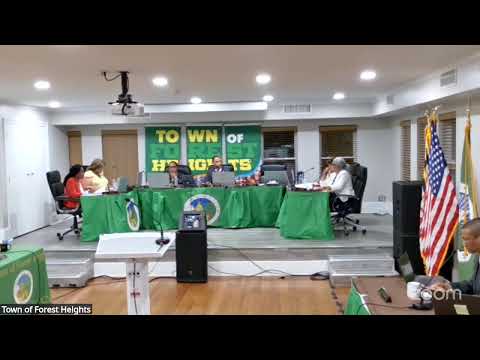
Residents raised sharp questions at the April 15 Forest Heights mayor and town council meeting about a new stop‑sign and speed‑camera program after three cameras were placed within a short stretch of Spokane Drive.
"How is it that our block or this section of the neighborhood has three cameras?" asked William Walker, a Spokane Drive resident, during the public comment period. Walker said he could not recall accidents at those corners and asked what pre‑installation surveys or other data justified the locations.
A second resident, who identified themself as Kaden, echoed Walker’s concern, saying they have lived in the neighborhood since 1993 and have not seen serious accidents where cameras were installed. "Are we the forgotten ones? Are we the stepchild here?" the resident asked.
Mayor Lillie responded that the town conducted two monitoring studies — one in late 2023 focused on a single intersection and another in early 2025 that covered 11 intersections — using at least 30 days of observed behavior before cameras were installed. She said the preliminary monitoring showed roughly 3,800 violations across those sites and that many intersections recorded violation rates of 60% or higher, which staff interpreted as evidence of problematic intersection design or unsafe driver behavior.
The mayor invited residents to a forthcoming May meeting where the town will host Aveo, the vendor operating the camera program, to present the first month of operational data and answer questions. "We would like to invite community members out so we can have a discussion around what the performance of the program has been so far and also deal with any concerns," she said.
Town staff and council members also offered additional channels for follow‑up, including speaking with officers at the police station and contact information from the clerk. Chief Ruckman said staff would follow up with residents and the mayor noted a check‑payment option was being added for those with limited online access to pay citations.
Why this matters: Residents who live closest to the cameras say the density of devices increases the likelihood of repeated citations and creates a sense of unfair targeting; the council is arranging a vendor presentation to show the data underpinning siting decisions and to answer procedural questions.
What’s next: The council plans a May meeting with the Aveo vendor to present monitoring and citation data and to take resident questions; the town also offered to provide follow‑up contact information for individual concerns.
Representative quotes: "How is it that our block or this section of the neighborhood has three cameras?" — William Walker, Spokane Drive resident "We actually did two studies before we implemented the program...we had 3,800 violations at those 11 intersections." — Mayor Lillie
Ending: The town did not take formal action on the camera program at the April 15 meeting but scheduled a vendor presentation and additional outreach to address residents' concerns.