Get Full Government Meeting Transcripts, Videos, & Alerts Forever!
Get email alerts on the Housing Element topic
No spam. Unsubscribe anytime.
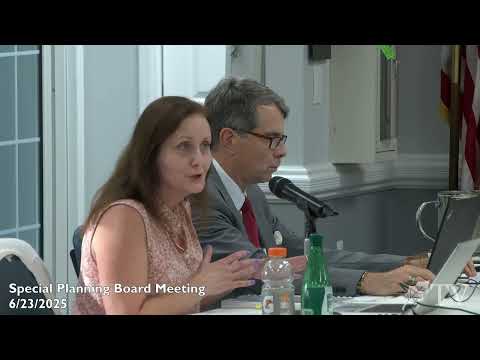
Oakland planning board adopts round-4 housing element; mayor and council endorse plan
Summary
The Oakland Planning Board adopted a revised housing element and fair share plan on June 23, 2025, settling on a round-4 obligation of 286 units with a durational adjustment because of missing sewer infrastructure. The Borough Council subsequently voted to endorse the plan (Resolution 25207); the plan faces a 60-day challenge period and further review by a special adjudicator and advocacy groups.
The Oakland Planning Board voted on June 23 to adopt a revised housing element and fair share plan amending the borough's master plan, and the Borough Council later endorsed that action with Resolution 25207.
The plan records a round-4 prospective-need settlement of 286 units for Oakland, following state round-4 calculations (DCA's initial figure of 306) and negotiations that led to a negotiated obligation. Borough planner Carolyn Reiter of T26M Associates told the board that "affordable housing in the state of New Jersey is a constitutional right" and explained the new statutory framework adopted in March 2024 that eliminated COA and moved obligations and challenge procedures to DCA and the courts.
Why it matters: the legislation creates aggressive deadlines and a new challenge-and-mediation process. Reiter said municipalities must adopt housing elements and fair share plans by June 30, 2025, and upload them to the program within 48 hours to preserve immunity from exclusionary-zoning litigation. The plan also relies on a durational adjustment to defer a portion of Oakland's unmet need because the borough lacks sewer infrastructure.
Details of the plan and debate: Reiter summarized Oakland's numbers: a rehabilitation obligation of 10 units; a realistic development potential (RDP) of 148 units; and an unmet need—addressed previously via vacant-land adjustments and settlements—deferred under the durational adjustment. She said those numbers are cumulative across rounds and noted that the borough had previously settled a larger aggregate obligation from rounds 13 and that round 4's incremental duty adds to the prior totals.
The plan includes inclusionary zoning measures and overlay districts for downtown (DT-1 and DT-2). Reiter recommended increasing density in the DT-1 overlay from 18 units per acre to 22 units per acre to support a waiver request tied to DEP procedures and to show the borough's commitment to meeting its obligation if infrastructure becomes available. She told the board that currently "there is no targeted date" for sewer installation and described the durational adjustment as a deferral, not a reduction, of the obligation.
Public concerns and clarifications: Several residents asked how state and regional numbers are derived and whether the borough intends to use eminent domain or redevelopment powers; Reiter said the plan contains no eminent-domain proposals and that redevelopment or takings would be separate processes needing further approvals. Eric Schaubach, president of the Oakwood Historical Society, urged preservation language for downtown historic buildings, and residents raised traffic and stormwater concerns. Reiter and borough staff said traffic, stormwater and site-specific impacts would be addressed through normal site-plan and engineering reviews when projects come forward.
Process and legal review: Reiter noted the plan and accompanying appendices (rehabilitation manual, development-fee ordinance, affordable-housing ordinance and affirmative-marketing plan) and said the plan would be reviewed by Oakland's special adjudicator and by the Fair Share Housing Center. She also described a statutory 60-day challenge period after adoption.
Contentious points: A council member raised an ethics and conflict-of-interest concern about a consultant (identified in the hearing transcript as Art Bernard) who had advised a special adjudicator yet had previously testified for developers; the council member said that created the appearance of bias and that he "find[s] the process messed up." Reiter and other borough officials said the adviser subsequently stepped aside from Oakland's process and that the settlement negotiations proceeded under the special adjudicator and the program's mediation procedures.
Votes at a glance: - Planning Board resolution to adopt the housing element and fair share plan (draft dated 06/12/2025): adopted by roll call (board members recorded affirmative votes; Mayor Kamala recorded a reluctant yes). (Planning Board roll call recorded in the hearing record.) - Borough of Oakland Resolution 25207 (Mayor and Council) endorsing the Planning Board-adopted round-4 housing element and fair share plan: motion carried after roll-call vote; recorded roll call showed a majority in favor with at least one "no." The council recorded the vote and declared the motion passed.
What happens next: The adopted plan will be subject to a 60-day challenge period and review by the borough's special adjudicator and the Fair Share Housing Center; any challenges or adjudicator comments could lead to further settlement discussions or revisions. Reiter noted that, barring legislative change, towns have until March 2026 to adopt implementing ordinances and make other conforming updates once obligations are finalized.
The planning board and council adjourned; the planning board will meet next on July 10, 2025, and the council's next meeting is scheduled for July 15, 2025.