Get Full Government Meeting Transcripts, Videos, & Alerts Forever!
Get email alerts on the Redevelopment topic
No spam. Unsubscribe anytime.
Planning board recommends 13 Ramapo Valley Road be declared an area in need of redevelopment
Summary
The Oakland Planning Board voted to recommend the governing body declare 13 Ramapo Valley Road (former Ramapo Motor Lodge) an area in need of redevelopment after a planner’s study found three statutory criteria — deteriorated buildings, long-term vacancy and detrimental site conditions — are met.
The Oakland Planning Board voted 8–0 to recommend that the borough governing body declare 13 Ramapo Valley Road (Block 2517, Lot 4) an area in need of redevelopment, the board announced after a public hearing on the planner’s preliminary investigation. The recommendation will be forwarded to the borough council for its determination.
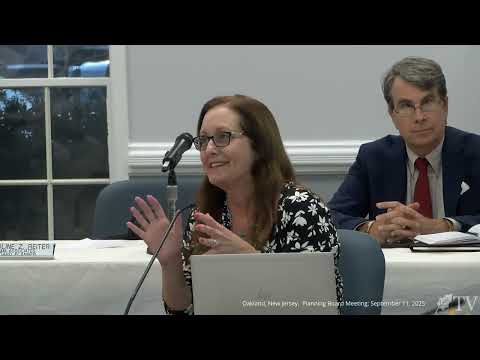
Caroline Reiter, the borough and board planner, told the board the prepared report and two site visits documented substantial building deterioration and site problems and that, in the planner’s opinion, three statutory redevelopment criteria — known in the law as letters a, b and d — are satisfied. “We have multiple vacant buildings, boarded windows, damaged roofs, sagging roofs, unsecured doors, water and rot damage and potential failing structural elements,” Reiter said, adding that at least one visible building has been vacant since 2018.
The study area covers the former Ramapo Motor Lodge, a parcel the report says is just under two acres and contains seven buildings, of which Reiter said six are vacant. Reiter said the study identifies roughly 0.29 acres of mapped wetlands, about 1.03 acres of flood-hazard area (including a 0.18-acre tributary) and related environmental encumbrances that affect how much of the lot is developable.
Public commenters described the site’s historical value and neighbors’ concerns. Eric Schaubach, who identified himself as president of the Oakland Historical Society, urged the planning board to add a historical-preservation element to the borough master plan after the recent loss of a locally significant stone house that Schaubach said had been listed on state and national historic registers. “I strongly encourage the planning board to adopt a historic preservation element in Oakland’s master plan,” Schaubach said.
Bob Gonelli, who said he is a contract purchaser of the property, told the board he has completed a seven-month DEP review and offered to provide the borough with the DEP delineation and approvals he obtained. Neighbor Robert Camposano, who lives across the street, said the property has been in poor condition for 22 years and asked whether an owner could halt the process; counsel and the planner said any owner would have opportunity to be heard and could appeal later decisions.
Board counsel framed the motion recommended to the governing body: that the planning board advise the council to designate the study area as in need of redevelopment (the recommendation included language referencing condemnation as an option consistent with the initiating resolution). The motion was moved and seconded and carried by roll-call vote. The board chair said the recommendation will be provided to the governing body; if the council agrees, the municipal resolution and study will be sent to the New Jersey Department of Community Affairs (DCA) for review and the process could continue toward a redevelopment plan, site-plan hearings and permitting.
What happens next: the planning board’s recommendation will be transmitted to the borough council for its determination; the council may accept or reject the recommendation, and DCA review and later public site-plan proceedings would follow if the council designates the area in need of redevelopment. The planner emphasized that designation begins a process and does not itself approve any specific development plan or site work. The planning board will consider any further plans at subsequent public hearings if and when the matter returns to the board.