Get Full Government Meeting Transcripts, Videos, & Alerts Forever!
Get email alerts on the Property Maintenance Parking topic
No spam. Unsubscribe anytime.
Council directs staff to rewrite lawn-parking rule after heated debate over exemptions and enforcement
Summary
Council debated an amendment to the property-maintenance code to ban routine parking on residential lawns. Members differed over exemptions, a proposed 24-hour limit, and whether warnings should precede citations; council directed staff to revise the draft and return it for consideration.
The Oakland Borough Council spent substantial time July 15 debating a proposed change to the property-maintenance code that would prohibit routinely parking vehicles on front lawns in residential areas.
Staff explained the goal was to align residential and commercial sections of the code so the practice would be prohibited across the borough. "This change basically aligns the language in both sections, to prohibit parking on lawns, throughout the community," a staff member said during the work session.
Council members split on how strict the rule should be. One council member argued the town should not create many special-case exemptions: "If the law says no, the answer is no," the council member said, pressing that a blanket prohibition avoids ambiguity. Other members raised scenarios — holiday gatherings, estate or garage sales, families with more cars than driveway space — that they said would need a clear, fair carve-out.
Several council members proposed middle-ground approaches: a 24-hour limit for lawn parking was suggested to reduce routine storage while allowing brief uses for events; another majority view favored a staged enforcement approach that begins with a notice of violation (NOV) or a warning before moving to fines. One council member told colleagues that adding explicit language giving enforcement officers discretion and providing a warning for a first offense would address the "serial abuser" problem without penalizing one-off events.
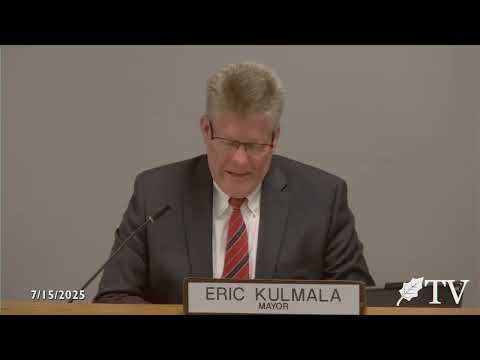
After extended back-and-forth about time-based rules, exemptions and operational enforcement, the council voted to send the draft back to staff for rewording. The mayor said staff should return a revised ordinance with clearer definitions and enforcement options at a future meeting for introduction and public notice.
The work-session discussion did not produce an adopted ordinance; council members said they want clearer draft language and comparators from neighboring towns before taking a formal vote.