Get Full Government Meeting Transcripts, Videos, & Alerts Forever!
Get email alerts on the Annexation topic
No spam. Unsubscribe anytime.
Cheyenne committee advances Microsoft‑linked Highlands annexation after heated debate; amendment to delay effective date fails
Summary
The City of Cheyenne Public Services Committee on July 6 recommended approval of a 3,500‑acre Highlands annexation and multiple rezones connected to a proposed Microsoft data‑center campus after hours of public comment and council debate. A proposed amendment to delay the annexation’s effective date to allow negotiation of a community‑benefit agreement failed in committee.
The Cheyenne Public Services Committee recommended on July 6 that the full City Council approve a package of annexation and rezoning measures tied to a proposed Microsoft Highlands development, advancing the items to a final vote next week after extended public comment and debate.
Microsoft representatives told the committee that annexation and rezoning would establish the framework for long‑range planning, not immediate construction. Rachel Erwing, Microsoft’s land development manager, said the applications “establish the framework for those evaluations and decisions” and warned that entitlement, infrastructure planning and permitting are long‑lead efforts. Lucas Downey of Microsoft’s community affairs team reiterated the company’s “Community 1st” commitments, saying, “We’ll pay our way to ensure our data centers don't increase electricity prices,” and that Microsoft will work on water stewardship, local jobs and community investments.
Why it matters: The package would expand the city’s urban service boundary and assign business‑park zoning to parcels that city staff and developers say are intended for large‑scale commercial development. Supporters said the move enables coordinated infrastructure investment; opponents said the council was advancing major land‑use changes without required engineering detail and without guarantees of specific community benefits.
Council debate and amendment: Councilman Larry Wolf (Ward 1) introduced a floor amendment to delete the ordinance’s current effective‑date clause and substitute language delaying the ordinance’s effective date until Dec. 31, 2026, “to allow the mayor and staff time to negotiate a community benefit agreement with Microsoft Inc.” Wolf said the delay was intended to preserve the city’s negotiating leverage even as the annexation would be granted. He told the committee the measure “grants the annexation but gives us time to work out these kinds of complex partnership arrangements with Microsoft.”
Opponents argued the amendment was too weak or unnecessary. Some council members and staff warned that granting annexation while postponing only the effective date could concede leverage; others said the amendment respected the mayor’s executive authority and was a compromise. After public testimony and discussion, the committee put the amendment to a vote and recorded it as failed in committee. The committee then returned to the primary motion and voted to recommend approval of the annexation and associated rezonings to the full council.
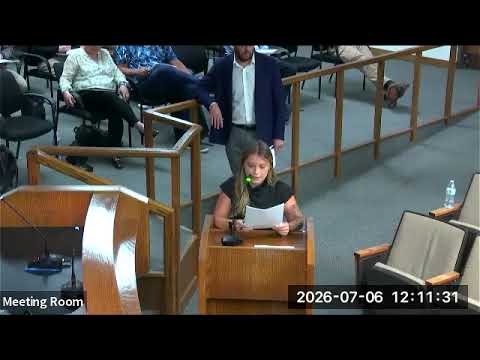
Public concerns and support: Nearly two hours of public comment reflected a split in the community. Charles Miller repeatedly warned the committee that moving forward on a large annexation without complete documents or engineering details risked procedural error and legal challenge; he told the committee it was acting on “an incomplete record” and placed several formal notices in the public record. Multiple residents said the city should pause or require stronger reclamation and mitigation protections. By contrast, Betsy Hale of Cheyenne Leads urged the committee not to delay, saying holding up the project “sort of says that we’re closed or we’re slowing down for business,” and noted that the organization is preparing regional transportation proposals and said public‑private partnerships can help pay for major infrastructure.
Permitting and statutory issues: Planning staff and the city attorney responded to concerns about process and state law. City Attorney John Brody told the committee that annexation is a legislative act, not quasi‑judicial, and staff explained that assigned zoning at annexation is an administrative step that may be changed later by the applicant’s zone‑change request. Staff also emphasized that state‑level environmental permits (DEQ) and other required approvals remain necessary for any future industrial or data‑center construction.
Votes at a glance (committee recommendation to council): - Item 14 (Highlands annexation, 3rd reading): Committee recommended approval to council after debate; an amendment to delay effective date failed in committee. - Item 15 (assigned AG zoning for portions of annexation): Committee recommended approval to council. - Item 16 (applicant‑requested rezoning to BP for portions of the Highlands): Committee recommended approval to council. - Item 18 (separate BP rezoning east of College Drive): Committee recommended approval to council. - Items 9–13 and item 31 (smaller annexations, assigned zones, plat for Swan Ranch): Committee recommended approval to council. - Items 23–24 (resolution overruling planning commission and future‑land‑use map amendment to mixed‑use employment for portions of the Highlands and urban‑service‑boundary expansion): Committee recommended approval to council.
What’s next: All measures advanced by the committee will be considered by the full City Council at third‑reading/ final action. Opponents said they plan to press legal and procedural challenges if the council adopts the measures without additional data or enforceable community‑benefit terms; supporters said the city’s established review and permitting processes will allow staff and regulators to ensure environmental and infrastructure standards are met.
Reporting notes: Quotes and attributions in this report come from the committee meeting transcript. The first formal council vote on these ordinances will be at the full council meeting scheduled next week; the committee’s action today is a recommendation, not a final adoption.