Get Full Government Meeting Transcripts, Videos, & Alerts Forever!
Get email alerts on the Probate topic
No spam. Unsubscribe anytime.
Presenter outlines probate process, clinics and resources for Cobb County residents
Summary
An Atlanta Legal Aid presenter walked through Georgia probate basics — definitions, who may file, types of proceedings, common deadlines and local clinic resources — and provided phone, clinic and website information for Cobb County residents seeking help.
An Atlanta Legal Aid presenter, speaking in conjunction with Cobb County, gave a public informational presentation explaining how probate works in Georgia and where residents can find free or low-cost assistance.
The presenter said, "Probate is simply the process through the court of collecting and managing those assets and distributing them in accordance with the law," and emphasized the session was a general overview, not individualized legal advice. The presenter said Atlanta Legal Aid provides free legal services to qualified individuals in areas including probate and recommended people with specific cases consult an attorney.
Why it matters: Probate procedures determine who may control a deceased person's assets, how creditors are paid and how property ultimately reaches heirs or beneficiaries. Mistakes can delay distributions or prompt litigation; the presenter supplied practical steps and local resources to reduce common errors.
Key points from the presentation
• Who may file and where: Anyone holding an original will generally must file it with the probate court in the county where the decedent resided. Executors commonly file, but others (including creditors) may file when necessary. If an estate is intestate (no will), anyone may petition to administer it or ask the court to appoint a county administrator.
• Types of proceedings: The presenter described probate in solemn form (which requires notice to heirs and typically results in a final order on the will's validity) and common form (which requires no notice but does not become a final order on validity for four years).
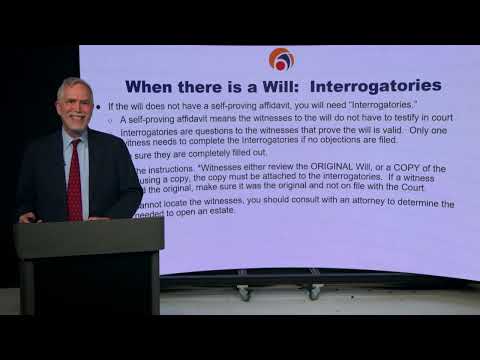
• Evidence and witnesses: Many wills now include a "self-proving affidavit" signed and notarized with witnesses; absent that, courts generally require interrogatories from witnesses, and witnesses must read the original or an attached copy when testifying.
• Challenges and timing: A caveat — the legal term for an objection to a will or petition for administration — may be filed by any heir or beneficiary (the presenter said it is generally filed within 30 days of receipt of a petition). Grounds include undue influence, lack of mental capacity, improper execution, or a later will.
• Emergency and limited procedures: A petition for temporary administration may be used in urgent cases to preserve assets (powers are limited and typically require a fiduciary bond), while a petition for letters of administration with will annexed lets the court appoint a different executor when the named executor is unavailable.
• Year's support: The presenter said a spouse and minor children may seek a petition for year's support to obtain assets needed to maintain their lifestyle while probate proceeds. That petition must be filed within 24 months of death; amounts and continued eligibility are handled at hearing.
• Small estates and bank transfers: For certain small estates, banks may transfer funds directly to a claimant without full probate; the presenter said this is limited to accounts "of no more than $15,000" and typically requires an affidavit showing heirs' agreement or entitlement.
Local help and resources
The presenter provided practical local contacts and forms: Atlanta Legal Aid's centralized intake at (404) 524-5811 (Monday–Thursday, 9 a.m.–11 a.m.) and online intake at atlantalegalaid.org; Cobb County Probate Court forms and information are available at cobbcounty.org/courts/probate-courtforms; and state-standard probate forms are posted at georgiaprobate.gov.
What the presentation did not do
The presenter repeatedly cautioned this was an informational overview and not legal advice for specific cases. Attendees with disputes, missing witnesses, or complicated estates were advised to seek private counsel.
Next steps and practical advice
The presenter recommended filers maintain thorough records, open a separate estate bank account to manage cash assets, identify and notify heirs and creditors, post any required fiduciary bond, and file inventories or annual returns if ordered. At the conclusion of fiduciary duties, an administrator or executor may petition for discharge from the court.
The presenter closed by directing attendees to the cited websites and the local Cobb County courthouse clinic for further assistance.