Get Full Government Meeting Transcripts, Videos, & Alerts Forever!
Get email alerts on the District Budget topic
No spam. Unsubscribe anytime.
Old Bridge board approves budget‑related finance items after heated public comments on cuts and class size
Summary
After two hours of public comment and debate over an $18 million budget shortfall and a proposed tax‑levy increase, the Old Bridge Township Board of Education approved multiple finance resolutions and a budget application; one key budget item passed 6–3 and the board authorized architects to begin a building assessment and enrollment study.
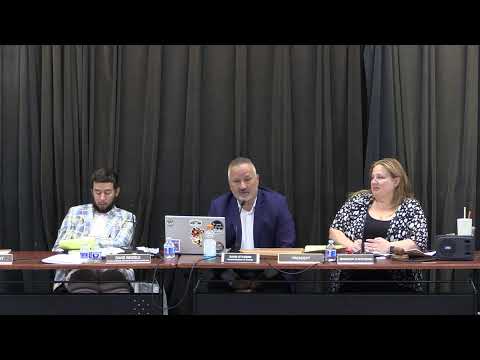
The Old Bridge Township Board of Education on May 13 approved a package of finance resolutions tied to a proposed budget intended to close a roughly $17.95–18.0 million structural deficit, after residents and staff urged the board to preserve kindergarten, reduce class sizes and protect extracurricular programs.
Public comment at the start of the meeting was dominated by appeals to prioritize students. "You can't balance the budget by bankrupting the opportunities of our children," Andrew Lewis of the OBEA told the board, urging investment over across‑the‑board cuts. Parents and a teacher described concrete problems: desks that are old or broken, classes with 25–28 students, and cuts to late‑bus transportation that prevent students from accessing after‑school activities.
The board had opened the meeting with a brief procedural motion to enter executive session on attorney–client matters related to the budget before returning to the public hearing. When the public comment period followed, speakers asked the board to exhaust grant, sponsorship and efficiency options before eliminating kindergarten or core programs. "If my taxes are going to increase again, I would at least like to know that my money is being well spent," parent Alicia Tannaro said.
District administration responded to several public requests. The superintendent's office confirmed the district employs a grant writer and pursues federal, state and private grants; administrators also recited the district's current class‑size policy maximums (kindergarten up to 25, grades 1–2 up to 28, and higher maximums for older grades) and offered to present program‑by‑program cost and participation data at upcoming policy and curriculum meetings.
Board members then debated how to respond to an 18‑million dollar shortfall that the district attributes in part to a change in the state's aid classification. One member warned that defeating the budget could hand control to the state: "If your budget goes down, it could be imposed at the number that's being considered here," the board attorney explained, citing recent examples in other districts where the Department of Education applied template budgets. Other board members urged resisting the state's funding formula and exploring coalition litigation, while several emphasized the practical risks of losing local control.
The board separated several finance items for discussion. It voted to table one agenda lease item (a proposed $40,000 annual transportation‑bay lease with the township) to seek more transparency on shared‑services revenues and costs. On a bundled set of finance resolutions (items 1, 3–7, 9 and 10), the board recorded unanimous roll‑call approval. Item 8 — the budget/application tied to the tax‑levy incentive aid program — was called separately and passed in a 6–3 roll call. The board agreed that if the state alters the amount it will convene an emergency meeting to adjust the district's application accordingly.
The meeting also approved capital planning work: the board voted to hire architects for a capital assessment and an enrollment/capacity (demography) study to inform potential redistricting or repurposing of schools. Administrators said those studies will take roughly four to six months, with preliminary results expected by September and fuller planning to follow.
Board members thanked the public and staff for engagement and emphasized follow‑up steps: administrators will compile program costs, summer‑school participation numbers and device‑use plans for upcoming committee meetings. The board also temporarily suspended a bylaw to allow emergency electronic (Zoom) meetings if the state requires a rapid application revision.
The board's decisions reflected two competing risks outlined during the meeting: deep local cuts to programs and services that community members said would harm students, versus relinquishing local control and possibly triggering a state‑imposed budget that could raise the tax levy differently than the board prefers. The administration and several board members argued the proposed path seeks to preserve programs and local authority while creating a framework for longer‑term structural changes.
Next steps: administrators will produce requested program‑level cost and participation data at committee meetings; the architecture firms will begin the building and enrollment studies; and the board stands ready to convene an emergency session if the state revises its approval of the district's application.