Get Full Government Meeting Transcripts, Videos, & Alerts Forever!
Get email alerts on the Budget topic
No spam. Unsubscribe anytime.
Old Bridge board details $18 million budget gap and weighs tax increases, deep program cuts
Summary
Facing an $18 million structural shortfall and a $30.4 million state adequacy gap, the Old Bridge Township Board of Education outlined options ranging from drastic cuts (half-day high school, school closures, no kindergarten) to multi‑million-dollar tax-levy increases that could restore programs and reserves.
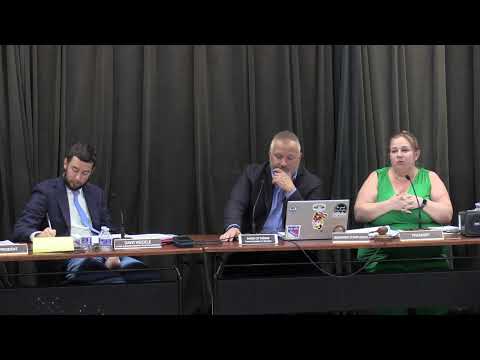
The Old Bridge Township Board of Education spent much of its April 24 meeting laying out an $18 million structural budget shortfall and the choices that would follow if the board cannot close the gap.
Board members and administrators said the deficit reflects several factors, including rising benefits and energy costs, lost state aid over two decades and the exhaustion of reserves that previously softened reductions. “When you add all those numbers together, you get to your $18 million,” a board member said while describing benefit increases and the district’s program-cost share.
The board described three illustrative fiscal paths. One, a smaller package of cuts and a modest levy increase, would still leave substantial shortfalls. A second, an approximately $20 million to $25 million tax-levy increase, would allow the district to keep current programs and capture up to $1 million in state tax-levy incentive aid. A third option would raise the levy to the state’s adequacy figure—about $30.4 million—which the board said would enable program restoration and rebuilding of reserves. The administration provided household impact examples: for an average assessed home, a $20 million increase would be roughly $417 per year; the $30.4 million maximum example was shown as about $617 per year for an average assessed value scenario.
Administrators warned that without large structural changes the district could face severe operational cuts. One board member outlined a worst-case scenario that would eliminate kindergarten, shorten the high-school day to six periods, close two elementary schools and remove most related-arts offerings and middle-school sports.
School business staff explained drivers of rising costs that make deep cuts the only way to hit a large target without a major levy action. The business administrator said energy and transportation costs are rising and that contract renewal mechanics (a CPI renewal clause and the lowest-responsible-bid process) limit near-term savings for vendor services.
Board members repeatedly pointed to the state funding formula as a root cause. Trustees said Old Bridge is considered under adequacy by about $30.4 million under the state’s calculation and urged greater transparency from Trenton about how aid is determined. The board also discussed short-term programs funded by competitive grants — including a nearly $500,000 New Jersey High Impact Tutoring grant for elementary students — that helped but cannot replace structural revenue.
Public commenters urged the board to invest in schools rather than make deep cuts. Andrew Lewis of the Old Bridge Education Association called on trustees to “invest in success,” saying that program cuts would harm students and staff who live and work in the district.
The board said it will continue public engagement through a strategic planning meeting on May 8 and noted the budget presentation is scheduled for May 6, with adoption to follow at the agenda session. Trustees asked residents to email feedback and attend upcoming meetings as they weigh which combination of tax increase and cuts to propose ahead of the public hearing and vote.
The district will present more detailed line‑item proposals at the budget hearing next month; no formal budget was adopted on April 24.