Get Full Government Meeting Transcripts, Videos, & Alerts Forever!
Get email alerts on the Early Learning Dual Designation topic
No spam. Unsubscribe anytime.
Department of Children, Youth and Families details new "dual designation" for bilingual and tribal early-learning programs
Summary
In an informational webinar, the Department of Children, Youth and Families outlined eligibility, required components, funding amounts per site and a timeline for a new "dual designation" recognizing bilingual and tribal-language early-learning programs, with implementation beginning July 2026.
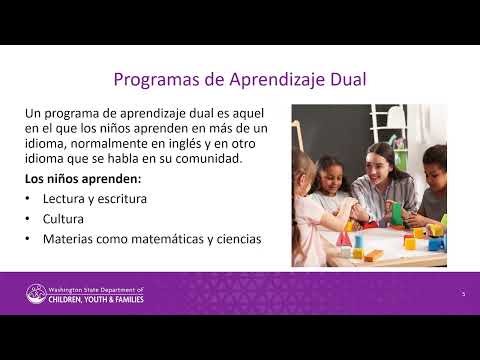
The Department of Children, Youth and Families (DCYF) used a webinar to explain a new "dual designation" that will recognize early-learning programs supporting children in more than one language and tribal-language revitalization efforts. The department said the designation will be integrated into the existing Early Achievers recognition cycle and will avoid duplicative steps for programs already doing bilingual work.
DCYF described the designation’s purpose and criteria: eligible programs must participate in Early Achievers, hold a quality rating of 3 or higher, list program languages in their policy manual, document collaboration with families to meet multilingual needs (or show how tribal-language users contribute to revitalization), and have staff who provide instruction in English and the associated language. "La designación dual es una forma oficial de reconocer a los programas que apoyan a los niños y a las familias multilingües," the agency official said.
The department listed required recognition components for most programs: a program profile, two 10–15 minute classroom videos (one in English and one in the associated language) demonstrating teacher–child language interaction, and documentation meeting standards 1–3 related to family engagement and support. Teachers and directors must complete DCYF’s dual-learning training and provide evidence that they meet the dual-learning program standards during their Early Achievers recognition cycle.
DCYF said tribal programs that use a culturally specific assessment approach will follow a different pathway: rather than completing the standard profile and videos, those programs will continue with their existing culturally grounded assessment process, complete an in-person assessment, and submit classroom-level action plans focused on language and family engagement to meet the third component.
Officials announced timing and duration: beginning July 2026, programs that receive the dual designation during their recognition cycle will be granted it for three years and must renew at the start of each new recognition cycle by submitting updated documentation. The department said programs must be in an active recognition cycle and may begin completing required components as of July 2026.
On funding, DCYF said support for dual-language programs and tribal-language revitalization is part of a department initiative to improve access, quality and stability. Awards will be distributed to programs actively applying the high-quality practices described in the standards and — where funding is available — will be made through the Early Achievers recognition cycle without a separate application. DCYF specified per-site award amounts of up to $2,100 for dual-language programs and up to $2,500 for tribal-language revitalization programs. Eligibility for funding includes programs that serve children receiving subsidy and that have applied for a subsidy payment within the 12 months before designation.
DCYF identified resources to support applicants: technical-assistance coaches, targeted training on dual education standards, the CECY system for submitting and tracking components, and the DCYF website as the official source for guidance, deadlines and updates. The agency official closed by thanking participants and providing an on-screen email address for follow-up questions.
Next steps: DCYF plans to publish additional component updates in 2027; programs interested in the designation should consult the DCYF website and coordinate with their Early Achievers coach to begin preparing materials ahead of July 2026.