Get Full Government Meeting Transcripts, Videos, & Alerts Forever!
Get email alerts on the Land Use Site Plan topic
No spam. Unsubscribe anytime.
Planning board approves Precision Cut Lumber site plan with conditions focused on manure management and containment
Summary
Nottingham’s planning board granted conditional approval for Precision Cut Lumber LLC to add one poultry house at 123 Old Turnpike Road, requiring NRCS‑verified runoff controls, fencing to keep birds out of vegetated treatment areas, covered composting, and a cap below the 3,000‑bird regulatory threshold.
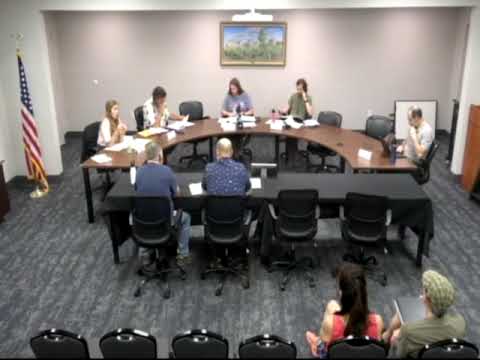
The Nottingham Planning Board voted July 8 to approve the site‑plan application from Precision Cut Lumber LLC for a single poultry house at 123 Old Turnpike Road, subject to both precedent and subsequent conditions intended to manage manure, runoff and animal containment. A motion to approve the application passed after a board discussion and a brief public comment period.
The applicant’s engineer, Ian McCann of Jones Beach Engineers, told the board the proposal had been reduced to one chicken house and that the team used USDA/NRCS guidance prorated to this flock size to estimate manure and bedding volumes. “As mentioned, we are down to one proposed chicken house,” McCann said, summarizing recent updates and noting that the third‑party agricultural review had generally concurred with the applicant’s assumptions.
The board read and amended a set of conditions. Conditions precedent — items the applicant must satisfy before final plan signing — include submission of final plans with professional seals/signatures, confirmation from the New Hampshire Department of Transportation that the existing driveway permit still covers the proposed use or obtaining a new permit, and showing a defined flock containment area on the final plan with the vegetated treatment area (VTA) located outside that containment zone. The board specifically asked the applicant to show permanent fence and electric fence lines plainly on the plan.
Conditions subsequent, to be completed within 18 months, center on water and nutrient controls and operational plans. They require a completed NRCS conservation plan or equivalent verification that the proposed treatment train (level spreader, vegetated treatment area / filter strip, detention basin and appropriate seeding) treats runoff from any barnyard or compost area before it leaves the property; a covered compost/manure pad sized and documented per NRCS guidance (the draft language references a 30‑by‑75‑foot covered pad and covered bins); keeping the flock below the 3,000‑bird threshold (the application documents intent for 2,800 birds); a written nutrient/manure/compost management plan developed with NRCS; and an integrated pest management plan developed with NRCS or the UNH Cooperative Extension. The board also required rodent‑proof feed storage and non‑chemical rodent controls as a preference, and tied fly control to regular turning and moisture management of compost piles.
A third‑party agricultural reviewer who used NRCS conservation planning principles emphasized the importance of containment and treatment. “If water touches manure, it’s considered contaminated,” the consultant said, explaining why the VTA and the capture/treatment train must be sized and validated so that any runoff from areas with animal activity is treated before leaving the property.
During public comment, a letter in favor from a neighbor was read into the record. Nearby resident Faith Levec said she remained concerned about scale and waste handling, telling the board, “a small business 3,000 birds doesn't seem very small to me,” and asking about humane free‑ranging and compost impacts on adjacent properties. The applicant and consultant answered that on‑site slaughter is not planned and said that the project as conditioned is designed to treat nutrient‑laden runoff and reduce vector pressure.
The motion to approve was moved by a board member and seconded; the chair called for voices in favor and the motion passed. The board will track subsequent conditions over the coming months and indicated applicants can return to report NRCS progress prior to the 18‑month deadline.
The planning board’s notice of decision and the final plan package will record the explicit conditions for both precedent and subsequent items, and the board requested clear plan notes showing the proposed entrance light, final fence alignment (permanent vs. electric), and the compost bin locations before issuing its final signature.